

In small towns, children learn certain lessons without ever being taught. They learn to read the weather in the way adults change subjects. They learn that some houses are not to be mentioned, some names not to be spoken aloud, some events to be remembered only in the grammar of implication. These lessons are not cruelty. They are survival. In places where everyone knows everyone, where reputation is the only currency that matters across generations, silence becomes a form of social architecture. It holds things in place. It keeps the peace. It allows life to continue after events that should, by any honest measure, make continuation impossible.
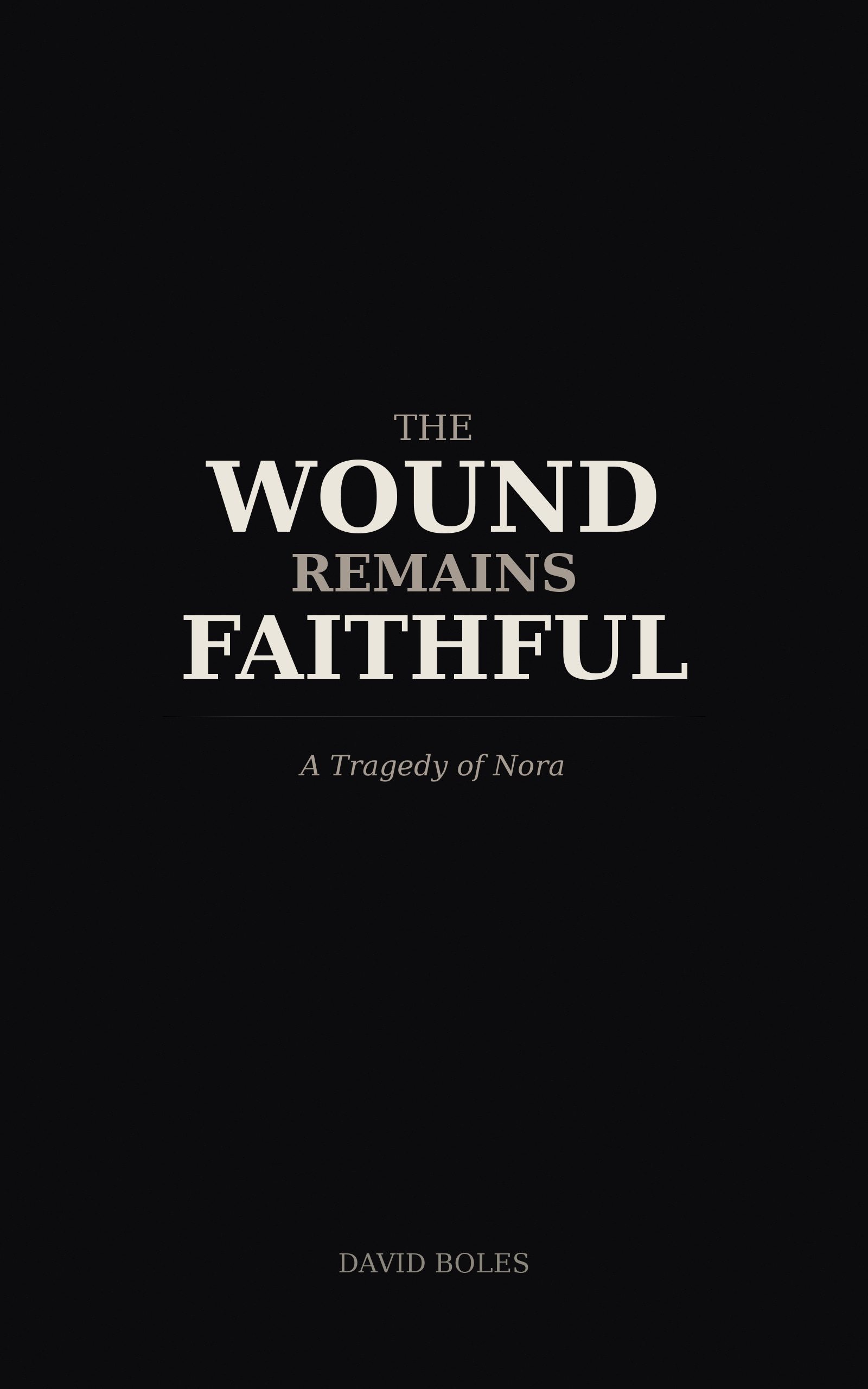
This is the terrain of The Wound Remains Faithful, my new novel that traces what happens when a seventeen-year-old girl walks out her front door one August morning and never comes home. Her name is Nora. She writes poems in a notebook hidden under her mattress. She has never seen the ocean. The book does not solve her disappearance. It does not deliver justice or closure. It follows instead the decades of aftermath: a family destroyed by grief, a community that learns to forget, a killer who builds an ordinary life while his victim remains forever seventeen.
The setting is intentionally unnamed. No state, no county, no landmarks that would anchor the story to a specific investigation or archive. This absence is not evasion. It is precision. The novel concerns a pattern rather than a case, a recurring structure of tragedy that plays out wherever children vanish and communities eventually turn away.
Anyone who grew up in a small town will recognize the mechanics. The first weeks of searching, when everyone participates, when the community tells itself that collective effort will produce results. The slow erosion of urgency as weeks become months. The moment when speaking of the missing child begins to feel like bad manners, like dwelling on unpleasantness, like refusing to let the town return to normal. The families who persist in remembering are gradually reclassified from sympathetic to difficult. They become the ones who will not let it go, who insist on dragging everyone back into grief that the community has decided to put behind itself.
This is how forgetting works. It is not a single decision but a thousand small ones, each individually defensible, collectively devastating. The newspaper stops running updates. The posters fade and are not replaced. The tip line is quietly discontinued. The detective retires and the case file moves to a basement. The family still holds vigil, but they hold it alone, and their persistence becomes its own kind of isolation.
The novel takes this process seriously. It does not treat forgetting as villainy but as something more troubling: a survival mechanism that allows communities to continue functioning after events that should shatter them. The same impulse that holds small towns together, the preference for harmony over honesty, for surface calm over difficult truth, becomes the instrument of erasure. Decency curdles into complicity. The refusal to dwell on unpleasantness becomes the refusal to remember the dead.
There is a phrase that appears in rural communities when tragedy strikes: we take care of our own. It means something real. It means casseroles delivered to grieving families, barns raised after fires, combines loaned during harvest emergencies. But it also means something else, something harder to name. It means that what happens here stays here. It means that outsiders do not need to know. It means that the community’s reputation matters more than any individual accounting of truth. Taking care of our own can become a form of burial, a way of putting things underground where they will not disturb the living.
The Wound Remains Faithful is not an indictment. It is a recognition. I grew up in this world, learned these lessons, absorbed them before he had language to question them. The novel is written against the silence he was raised in, but it is not written with contempt for the people who taught him that silence. They were doing what they believed was necessary. They were protecting themselves and their children from truths too large to carry. The tragedy is that protection and erasure can wear the same face.
The book’s title comes from a counterintuitive moral claim: that some wounds are meant to stay open. Healing, in the usual sense, means the wound closes. Tissue regenerates. Scars form. The body returns to function. But when the wound is a murdered child, closure means forgetting, and forgetting means the child dies twice. The wound that remains faithful is the wound that refuses to heal because healing would betray the one who suffered. Memory becomes a form of loyalty. Grief becomes a form of witness.
This is difficult territory. We are trained to believe that moving on is healthy, that dwelling in grief is pathological, that the goal of mourning is to reach a place where the loss no longer dominates. The novel pushes back against this therapeutic consensus. It suggests that some losses should dominate, that some grief should never resolve, that the families of murdered children are not failing to heal but refusing to participate in a forgetting that would make them complicit in the original crime.
The dedication reads: “For the missing and murdered children whose names we will never know.” This is not rhetoric. Every community has them. The cases that never made national news, the disappearances that were noted in a police report and then filed away, the children whose families lacked the resources or connections to keep attention focused. The novel mourns them not by naming them, which is impossible, but by insisting that their absence matters, that the silence surrounding them is a scandal, that the communities which forgot them owe a debt they have not paid.
Prairie Voice exists to examine what the land remembers when America forgets. This novel belongs to that project. It takes seriously the small-town structures that shaped so many of us, the codes of silence and solidarity that we learned before we could question them, and it asks what those structures cost. The answer, in the case of vanished children, is everything. The wound remains faithful. The question is whether we will.
The Wound Remains Faithful: A Tragedy of Nora is available as a Kindle edition at ($9.99) at Amazon, and as an Amazon paperback, and also as an audiobook. For those in need, we also offer a free PDF download at David Boles Books; we only ask that if you can later afford to purchase the book, in whatever media form suits you, that you do so to help support independent authors and small publishing houses.