

The GPS stops working reliably in certain zones across the northern prairie, particularly around Minot, North Dakota, where the Air Force maintains nuclear missile fields. Cell towers thin to nothing. Dating apps show no matches for extraordinary distances.
This calculated isolation protects the Minuteman III missiles scattered across thousands of square miles of wheat fields and ranch land, each one nestled deep underground in reinforced concrete silos built to withstand everything but direct nuclear impact.
The young airmen and women who maintain these weapons live in towns that progress forgot, places where the newest building might be decades old, where Friday night means the VFW or nothing, where marrying your high school sweetheart becomes mathematically probable given the population density.
The officers who command these missile alert facilities spend twenty-four-hour shifts underground in capsules designed during the Kennedy administration, updated with technology that feels ancient by Silicon Valley standards, maintaining weapons that could end civilization using systems that predate the internet. Above them, wheat grows. Cattle graze.
The wind pushes clouds across a sky so vast it seems to curve at the edges. Below, they run practice drills for launching nuclear weapons, following procedures written during the Cold War, updated for enemies that might not be nations, might not even exist yet. The prairie’s emptiness makes this possible. No one protests what they cannot see. No one fears what seems like farmland.
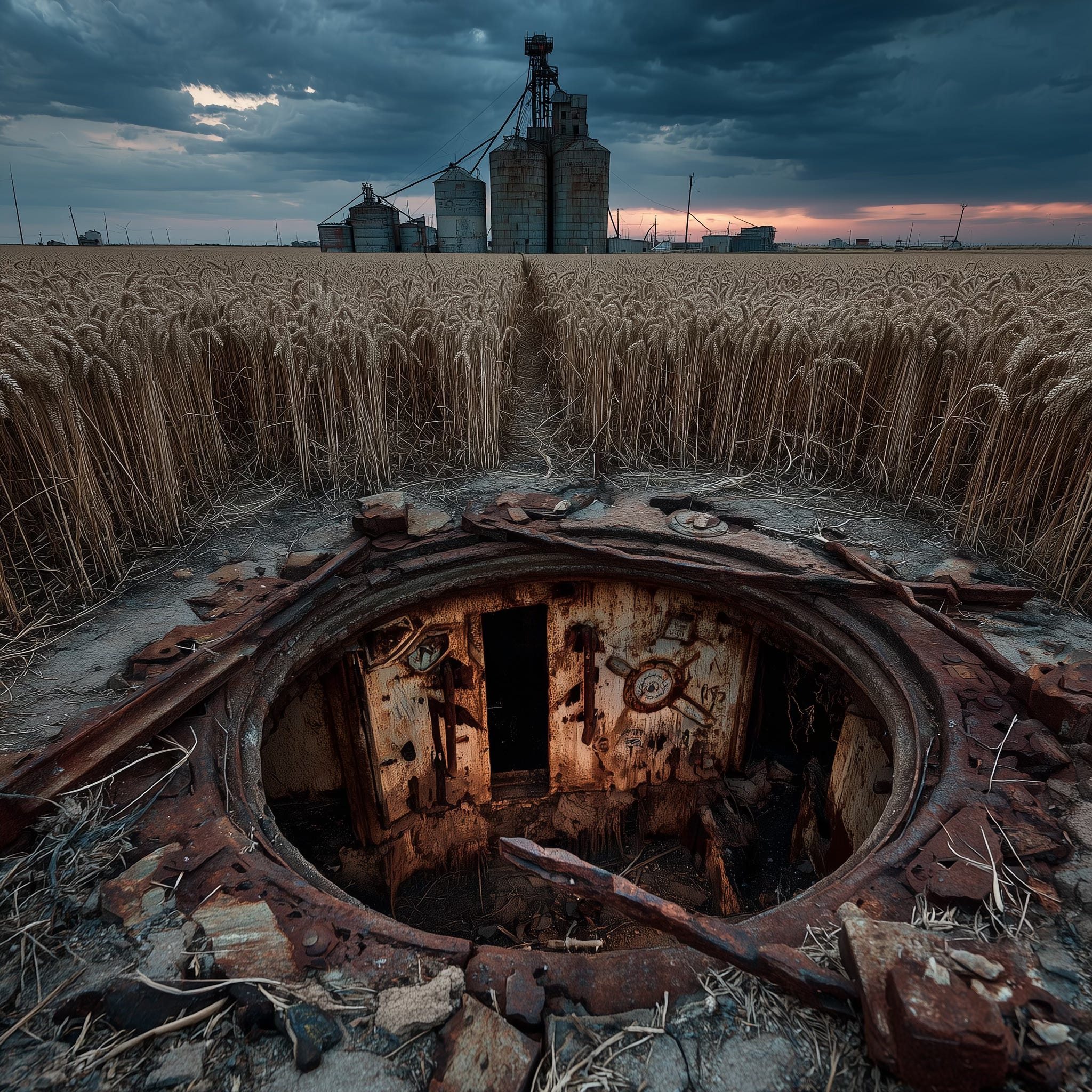
Across Kansas, Nebraska, Wyoming, and other prairie states, decommissioned Cold War missile silos have found second lives as luxury survival bunkers. Real estate listings describe them as “hardened properties.” The buyers include tech executives, hedge fund managers, celebrities whose names appear in tabloids.
The conversion costs run into millions, transforming spaces designed for mutual assured destruction into underground mansions. Contractors who specialize in these renovations describe installing air filtration systems that cost more than most houses, solar panels hidden in fake grain silos, satellite uplinks disguised as weather equipment.
Some sites reportedly feature underground swimming pools, climbing walls, surgical suites. The new owners are buying distance from consequence, investing in the prairie’s fundamental resource: room to hide.
The economy of apocalypse spreads through prairie towns in observable patterns. Real estate agents begin specializing in remote properties with “security features.” Construction crews learn to work with blast doors. Local contractors pursue security clearances.
School districts near missile fields acknowledge the surreal reality, some embracing it with dark humor, others maintaining studied silence about what their parents do for work. The restaurants and gas stations in these towns serve customers who cannot discuss their work, contractors who cannot describe their projects, and buyers whose purposes remain deliberately vague.
The weapons change, the technology advances, but the emptiness remains constant. The prairie has always been about distance: distance from civilization, distance from consequences, distance from the places where decisions get made. Now that distance gets monetized by those who understand that isolation itself has become a luxury good, that the ability to disappear has never been more valuable.
Underground, the prairie becomes a different place entirely. Decommissioned facilities that once prepared for nuclear war now serve new purposes: data storage, document vaults, private collections.
The transformation follows a pattern. Government infrastructure built with Cold War urgency gets abandoned, sold cheap to local buyers who can’t maintain it, then eventually acquired by those with resources to transform burial grounds into bunkers, tombs into treasure vaults.
The new owners of these spaces understand something essential about the prairie: it has always been about what you cannot see. The real power was never in the grain elevators or the feedlots or even the missiles. It was in the emptiness itself, the space between things, the distance that makes denial possible.
The Air Force personnel who drive between silos at three in the morning, checking on weapons that must never be used, understand this differently than the wealthy buyers installing private underground facilities.
For the military members, the emptiness represents duty, the isolation means service, the distance equals sacrifice. For the buyers, emptiness offers opportunity, isolation provides security, distance enables freedom from accountability.
Both groups need the prairie for what it lacks: witnesses, questions, alternatives to the reality they’re creating beneath the wheat fields where America hides its capacity for ending everything while pretending to grow food.
This is the underground prairie, where the nation’s nuclear infrastructure meets private survival fantasies, where Cold War architecture becomes real estate opportunity, where the machinery of apocalypse gets renovated for comfort.
The prairie’s silence, once a sign of its abandonment, becomes its most valuable asset. Here in the emptiness between destinations, America builds its escape plans and burial grounds simultaneously, constructing elaborate refuges for the living while maintaining weapons for creating the dead. The wheat grows above it all, indifferent as wind, hiding the complete transformation of the world beneath its roots.
The pattern is real, documented in property records, military budgets, contractor advertisements, and real estate listings. The details vary by location, by buyer, by purpose, but the essential truth remains: beneath the prairie’s surface exists another country entirely, one built on the possibility of ending the world and the probability of surviving its end.
This underground prairie operates on different rules, serves different masters, imagines different futures. Yet it depends entirely on the same resource that has always defined the prairie: emptiness vast enough to hide what we cannot bear to acknowledge, distance great enough to make the unthinkable seem theoretical, isolation complete enough to pretend that what happens here doesn’t happen at all.