

US-83 runs from Brownsville, Texas to the Manitoba border, roughly nineteen hundred miles of pavement crossing six states. The highway signs stay small and green. Speed limits shift with the county line. A driver who never stops in any of the towns might leave the corridor with the impression that the road is the country, and the country is the road.
The towns tell a different story. Slow the car at the edge of Menard, Texas, and read the signs on Ellis Street. Frontera Healthcare Network operates a rural health clinic. Menard Manor, a skilled nursing facility, sits a few blocks away. Menard EMS runs an ambulance out of its station. The three buildings stand close enough that the same nurse might hold shifts in two of them in the same week. What the town does not have, and has not had since 1989, is a hospital.
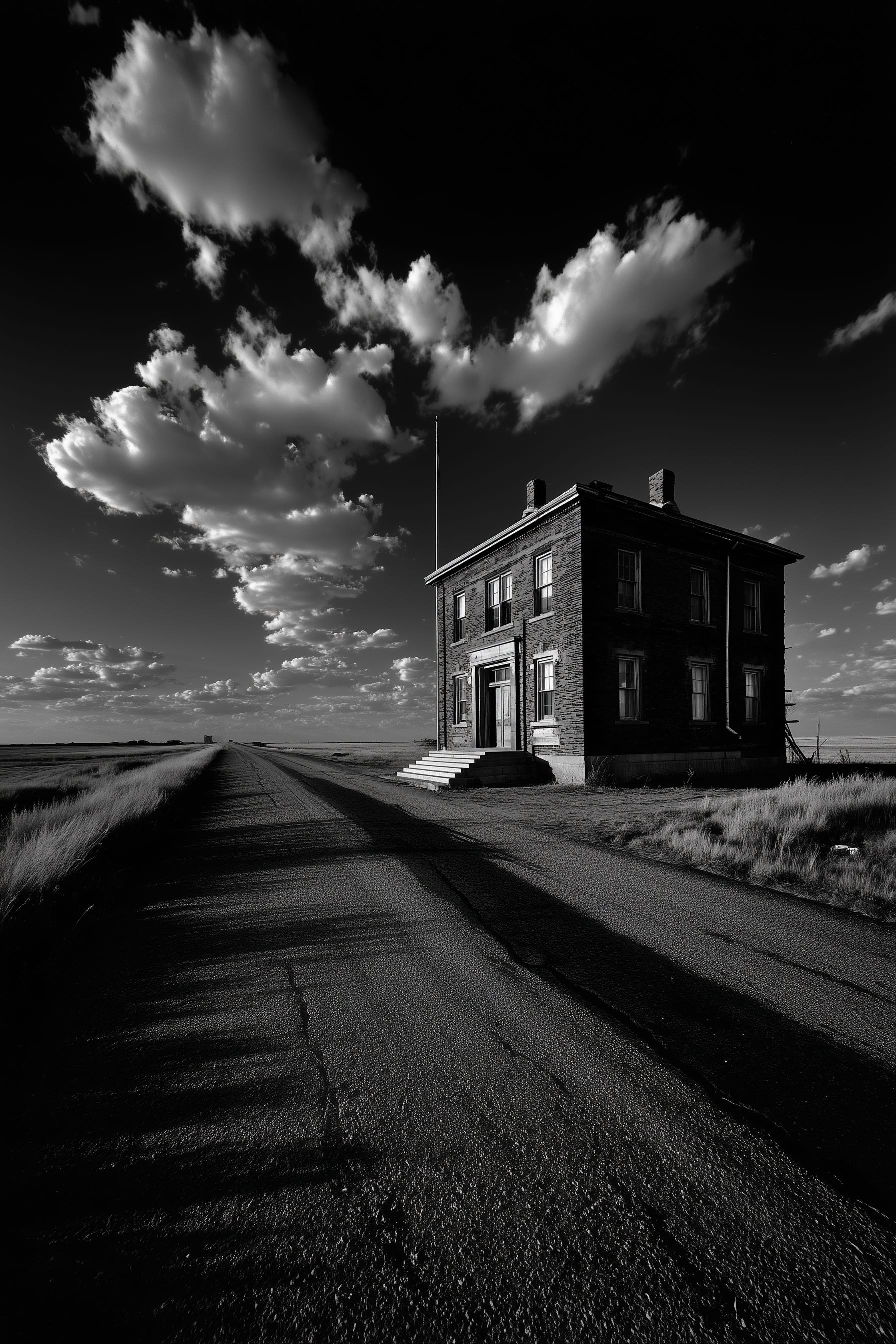
Menard Hospital closed that year. The Texas Organization of Rural and Community Hospitals records the closure in its roster of rural hospital shutdowns, with no asterisk and no reopening notation. When a Menard resident now has a major medical emergency, the ambulance drives east on US-190 toward Brady, where Heart of Texas Memorial Hospital waits at the end of a thirty-mile run. Thirty miles is too far for a severe trauma victim to tolerate. The brief interval between a grave injury and definitive surgical care collapses here into a geographic problem that neither wishful thinking nor helicopter transport fully solves.
Menard County holds approximately 1,900 residents. A hospital closure in a metropolitan suburb would produce letters to the editor and a city council hearing. In a county this size, the closure rearranges every future medical decision a resident will make. Pregnant women plan their deliveries around a thirty-mile drive. Older couples weigh the question of whether to move closer to adult children in larger cities. Ranchers wounded by hydraulic equipment must survive the ambulance ride before they can survive the injury. These calculations do not make the nightly news. They settle into ordinary life as conditions, like the drought or the price of beef.
The hospital does not come back. Menard County Hospital District, which once operated the hospital, now owns the nursing facility and leases the clinic building to a federally qualified health center. Its revenue comes from nursing home reimbursements and ambulance service fees, neither of which can generate the margin a hospital would require. Over time, the absence becomes part of what the town takes for granted. Children grow up without any memory of the hospital building ever functioning as one.
Drive north on US-83 for about fourteen hours, without stopping, and a similar pattern waits in Thomas County, Kansas. Rexford sits on the highway twenty miles north of Interstate 70. The town had 197 people at the 2020 census, a post office, a grain elevator, a Lutheran church, and Golden Plains High School. The school’s name contains the first clue. No town called Golden Plains appears on any Kansas map.
Golden Plains USD 316 was formed when three communities consolidated their schools. Rexford had one. Selden, in Sheridan County east of Rexford, had another. Menlo, another Thomas County town, had a third. After consolidation, Rexford High School closed as a Rexford institution. Its building now houses Golden Plains Middle and High School, with students bused in from all three communities. Elementary students attend school in Selden. A district office keeps addresses in both towns. Rexford’s own school mascot, the entity that won and lost its Friday night games for a century, now exists only in the memory of the town’s older residents.
The word consolidation obscures what happens. A small town loses its school in stages. First the high school goes, because high schools require more teachers, laboratories, and field equipment than the taxpaying population can sustain. Elementary classrooms stay a while longer. Then elementary classrooms move or share a building with the next town over. The final stage involves the identity question, often unacknowledged in the newspaper coverage of the consolidation vote. A town without a school stops identifying itself through its students. The sign at the edge of town no longer advertises the graduating class. Friday night football happens somewhere else. Yearbook photographs carry a different name on the spine.
The school and the hospital hold the same position in the civic architecture of a small American town. They require public subsidy, employ a significant share of local workers, and draw people from outlying farms and ranches into town to spend money at the grocery store, the café, and the hardware store. They serve the two populations least able to travel far: the youngest and the oldest. When either institution leaves, the other comes under pressure. Teachers hesitate to raise children in a town without medical care. Doctors hesitate to practice in a town without decent schools. The feedback compounds until both institutions leave or the town shrinks to a population that can no longer sustain either.
The argument for institutional withdrawal always reduces to efficiency. A hospital that admits one patient a day cannot support three shifts of nursing staff. A high school with eleven graduates per class cannot staff a chemistry laboratory and a foreign language program. The arithmetic is honest. The rules generating the arithmetic, written in urban capitals and calibrated for urban volume, are less examined. What neither the arithmetic nor the rules capture is the second-order cost. A town that loses its hospital loses the people who would have worked there. A town that loses its school loses the families who would have sent their children there. The new equation never balances. The town falls toward a smaller population, which justifies further withdrawal, which accelerates the fall.
Menard’s 1989 closure and the Kansas school consolidations that swept the plains after the 1963 School Unification Act happened under different pressures. Menard lost its hospital because operating a rural hospital under Medicare reimbursement rates calibrated for urban volume became financially impossible. The Kansas consolidations reflected a state legislature’s calculation that fewer districts could be administered at lower cost while protecting a minimum educational floor. The local experience, however, followed the same arc. An institution left. The building remained for a while, then was repurposed or demolished. The town survived, with less of itself remaining.
Defenders of consolidation point out, with some justification, that students in Golden Plains High School now have access to chemistry labs, athletic programs, and teacher specialization that a Rexford-only, Selden-only, or Menlo-only school could not provide. Defenders of rural hospital closures point out that emergency transport to a better-equipped facility produces, in some cases, better outcomes than a small rural hospital could. These arguments have merit. They omit the longer consequence: everything that happens to the town across the three decades after the institution leaves.
US-83 threads these absences together along its full length. A traveler moving from Menard to Rexford passes grain elevators, brick courthouse squares, fuel stops, auction barns, and water towers painted with mascot names. From behind a windshield at seventy miles an hour, the towns look continuous with their own histories. A stop in any one of them reveals the longer record: a grocery that closed in a documented year, a theater that closed in another, a hospital, a high school absorbed into a consolidated district. Nothing on the roadway registers this arithmetic. Speed limits change at the county lines. Traffic stays light. Travelers keep moving. What remains in the towns remains.