

There is a tool that used to hang in every barn in Nebraska and now hangs, mislabeled, in the county museums. It is a wide, shallow basket, or a fork like a broad flat fork, and its job was to throw threshed grain into the wind so the chaff would blow and the wheat would fall. Winnowing. The combine ended the word’s working life. The tool outlived its job, the way tools do, and now a child who stands in front of one in a museum case reads the little card and learns a word her great-grandfather used every August without thinking about it.
I bring this up because of a prophecy.
In the oldest long story the West has kept, the hero gets his ending from a dead prophet, and it is not an ending anyone films. When your account is settled at home, the prophet says, shoulder your oar and walk inland. Keep walking until you reach a people who know nothing of the sea, a people who do not salt their food with it. When a stranger asks what the thing on your shoulder is, when he calls it a winnowing fan, plant the oar there, in the ground, and make your sacrifice. Then go home and grow old.
Think about what the poem is describing. A country so far from water that a boat tool reads as a farm tool. A people whose world is complete without the sea, complete enough to have its own name ready for whatever a stranger carries in from the shore. The poem is Greek and twenty-eight centuries old and its idea of the far country is a place with grain in the wind and no word for an oar. It is describing Nebraska, or some cousin of it, a place it could not have known about, the way prophecy works best: by accident, and exactly.
I know the country because I grew up in it. Lincoln is a city now, a city that keeps its fields at the edge of town and its county fairs on schedule. When I was a teenager I read aloud to children at the Bethany branch of the city library, Saturdays, winter light through the windows, and some of what I read was Homer. The children did not know what an oar was for until the stories taught them. They knew what grain was. They had ridden in the cabs of machines that ate whole fields. The poem survived them easily, the way it survives everything, by being about people and weather and a man trying to get home, and not about the tool.
That is the thing about the old stories. They are carried into countries that cannot recognize them, and they are misread, and the misreading is how they travel. The poem does not fear the stranger’s mistake. It plans on it. The oar is planted where it is unreadable, and it stands, and the country that misreads it is the country that keeps it.
We are in a season of remaking the old stories. You have seen it at the multiplex and on the streaming services and in the trailers that come cut to the same drumbeat. The incidents stay. The monsters and the storms and the famous scenes, all kept. But the person inside the story changes, quietly, the way a label on a museum card changes a tool. The hero used to endure. Now the hero heals. The gods used to be weather. Now they are symptoms. The ending used to settle an account. Now it releases a patient. The new label is always confident, and it is always written in the new country’s own language, and it is always a little bit wrong about what it is looking at.
This is not a complaint about the present, exactly, because the present is only doing what every era does. It is a note about what to watch for. When the remake gives the hero a childhood, when the goddess gets dissolved into a feeling, when the ending forgives everybody, you are watching the label get swapped on the tool. The poem’s word for its hero is polytropos, of many turns, and the word has outlasted every reading anyone has put on it, including ours. The poem has been provincialized by empires and survived. It can survive a focus group.
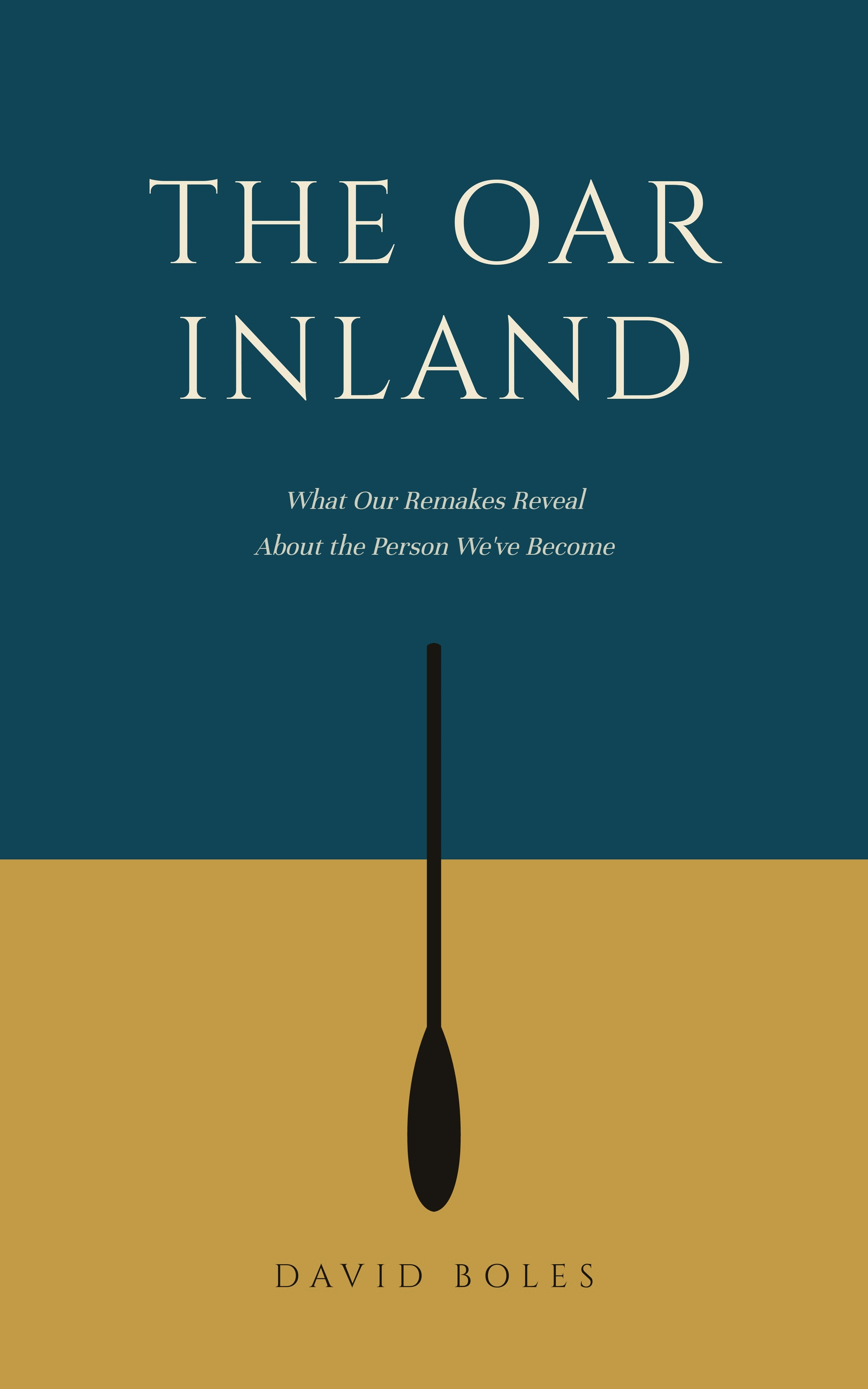
Here is the part I want to celebrate. I spent the summer and the fall on a book about all of it, and the book is out now, and it is called The Oar Inland, and its title is the prophecy. It reads the evidence the way this page tries to read the county: at the source, in the open, with the names named. It watches the poem’s person get replaced by the era’s person and follows the demand from the letters of 1868 to the publisher’s desk of 2019. It prices the manuals that schedule the wound on a page number. And it keeps the examples honest: the four faithful changers and the disavowers, Joyce and the Coens and Kurosawa and a Beverly Hills high school against the machine’s own best products. Then it hands over the instrument and lets you finish the list alone, in whatever theater you are sitting in.
I wrote it here, in the country the prophecy meant, in the same city where I once read the poem aloud to children, and I take a certain prairie pride in that. The oar was always going to end up here. The poem said so. A place where the wheat goes into the wind and the chaff goes somewhere else, where a thing from the sea gets a farm name and stands in the ground anyway, misread and unbothered and holding.
The stranger’s mistake is not ignorance, the book says. It is another complete world, with its own tools, its own seasons, its own grain. We are that world. We have been that world since before the state was a state. And if a hero ever comes through here with an oar on his shoulder, we will know what to call it, and we will be wrong, and the poem will have counted on exactly that.
The Winnowing Fan is what we would have called it. The poem is fine with the mistake. Plant the thing. The ground answers.
The Oar Inland: What Our Remakes Reveal About the Person We’ve Become, by David Boles, is out now in hardcover-rival paperback, Kindle, and web editions, at bolesbooks.com and wherever books are sold. If you have walked out of a remake feeling something was missing, this book was written in your defense.