

The stones make an unpromising monument. Farmington, New Hampshire, has a town pound built in 1823, forty feet square, with dry laid fieldstone walls rising seven feet. The walls measure three feet across at the base and carry long granite capstones, while an opening on the southeast side once held a wooden gate beneath a stone lintel. The National Register nomination says the enclosure replaced an earlier pound, probably wooden, built around 1802. There is no roof and no room for a speech. The structure answered a recurrent farming problem by giving it walls. Livestock wandered. Gardens and crops suffered. Somebody had to hold the animal while the owner and the injured party settled the account.
Farmington voted for the enclosure in 1822. The town meeting directed the selectmen to find a convenient plot near the center and let out the construction contract. Hunkin Colbath Jr. received five dollars for a lot measuring 120 by 130 feet. Nicholas Colbath received fifty nine dollars in partial payment for building the pound, though the surviving record does not preserve his full pay. Storekeeper Joseph Sherburne received $2.84 for spirits used in part to sustain the builders. John Roberts became pound keeper for 1824. I like the administrative plainness of those entries. A public problem got a location and a builder. Someone was assigned to look after it. The town meeting had made named people responsible for the next step.
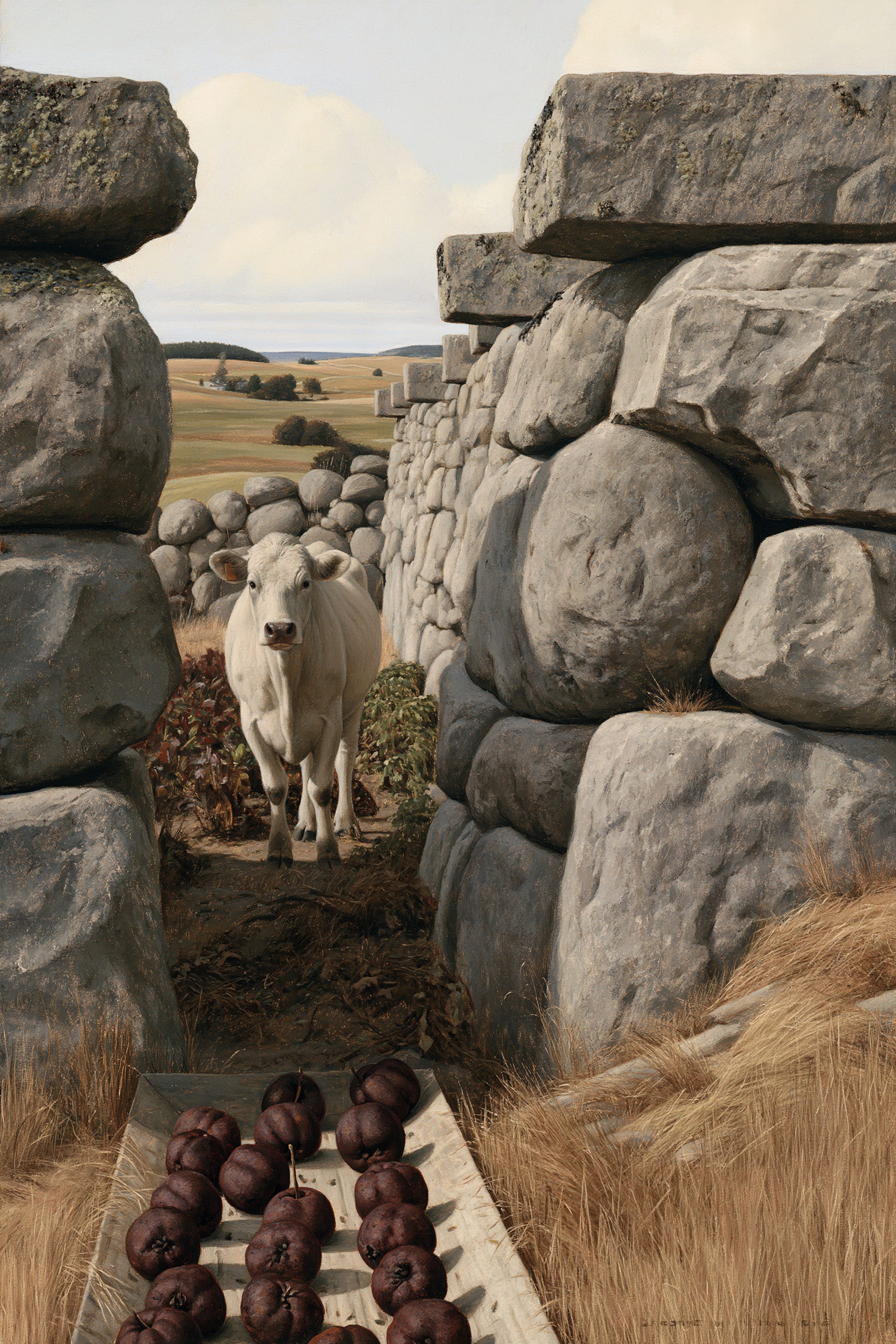
A loose cow makes two kinds of trouble. The first is physical and easy to describe. Beans are crushed and corn is eaten. A morning of labor can disappear under hooves. The second trouble concerns the relationship between the cow’s owner and the person surveying the damage. Each may know the other’s circumstances. One may have a failing fence and no free day to repair it. The other may have planted late after a wet spring. Those facts can explain the event without repairing the garden. An apology can recognize the loss, yet it cannot replant a row or return a growing week. The injured neighbor may forgive the owner and still resent having to do all the work.
Goodwill cannot settle that account by itself. Affection often makes the first conversation gentler, which has value, but it can also make an honest claim harder to raise. The injured neighbor may calculate the cost of seeming difficult. The owner may hear a request for compensation as an accusation of bad character. A small agricultural accident then becomes a test of loyalty. The person with the ruined crop is expected to prove generosity by absorbing the expense. This is a poor use of friendship. Friends should be able to name a loss without putting the whole relationship on trial. A recognized procedure lowers the emotional price of saying that the damage matters.
The province had an answer in 1718. New Hampshire required every town to maintain a pound at public expense. Its law allowed someone to impound a trespassing animal when the pound keeper or hayward was unavailable. The animal’s owner had to be notified when known. Unknown ownership called for public notice, with word carried locally and into two neighboring towns. The fee schedule covered feed and water. It also set charges for bringing livestock in and releasing them. Unclaimed animals could provide indemnity to injured parties or be auctioned by the town. These provisions placed ordinary tasks between injury and resentment. That routine spared neighbors from negotiating each step while standing angry in a damaged field.
The state tightened the procedure in 1791. Towns still had to maintain pounds and faced penalties for failing to comply. Where no pound existed, a person could hold a trespassing animal in a private pen or barn, provided the owner received prompt notice. A keeper who neglected impounded animals could face an action for that neglect. Unclaimed stock could be disposed of after four days. The animal therefore had a legal status and the owner had a chance to respond. Keepers also had duties. This was custody attached to a dispute, not revenge against a beast. The enclosure gave everyone time to calculate damages while preventing more damage in the same garden.
The old system deserves no soft focus. Its punishments for pound breach and interference could be severe. Any fee system can become a burden or an opportunity for abuse. A stone wall has never guaranteed fairness. The useful part is narrower. The pound made care and compensation discussable before anyone reached a verdict about a neighbor’s soul. Its best logic was proportionate. The owner could recover the animal after meeting the required charges. The injured party had a route toward indemnity. Keepers had to feed and water what the town confined. Their authority over the animal came with work attached. A modern community can keep that principle and refuse the old cruelties.
A later entry shows the ordinary work. Farmington’s town records for 1878 list a pound keeper and two fence viewers. The notice concerns two ewes with two lambs, along with a South Down buck. Frank Emerson’s name appears in the entry, and Orrin P. Giles signed the notice. Its final instruction reads, “Owner can claim after paying charges.” The sentence does its job because the animals have been found and the terms of return are known. The public record holds the dispute in a few plain lines. There is room for the people to remain neighbors after the sheep leave the enclosure.
Rural life increases the cost of bitterness. People share roads and fence lines. Drainage and borrowed equipment create recurring contacts. Memories last. A feud can complicate a request for help during a storm or a harvest, and it can turn a chance meeting at the store into another inspection of old injuries. A small community needs ways to finish disputes because avoidance is rarely available. Distance can sometimes spare people a second meeting. Farm neighbors often lack that option. Their institutions must let them return to business after somebody has been careless. The pound addressed that need with more honesty than a sermon about harmony could supply.
Modern neighbors face smaller versions of this. A borrowed ladder comes back bent. A dog tears up a bed of lettuce. Water from one property cuts a channel through another. People often receive advice to be kind and communicate, as though tone were the whole remedy. Kindness helps the discussion begin. It does not decide who replaces the ladder or rebuilds the bed. A fair answer needs a few practical parts. Someone inspects the damage. Both sides know where to take the claim. The responsible person pays or performs the repair, and the amount bears some relation to the loss. Nobody has to pretend the event was meaningless to preserve the peace.
The medlar requires another kind of judgment. This small fruit arrives hard and bitter in autumn. It is unready for eating. The Royal Horticultural Society advises harvesting medlars in late October or November after exposure to frost. It then instructs growers to blet them in storage. During bletting, starches convert to sugar while acids and tannins decrease. The flesh softens and sweetens. Its color also darkens and its skin wrinkles, which gives an uninformed observer every visual reason to throw it away. Royal Horticultural Society guidance distinguishes this change from rotting. The flesh should be soft and juicy, with sweetness and aroma replacing the earlier bitterness. A grower who has never seen the process may discard the fruit at its useful stage.
The ripening method is pleasantly specific. Fruits rest apart on trays with their stalks facing upward. Their storage place should be cool and dark, with ventilation and protection from frost. After two or three weeks, the medlars soften and turn darker brown. Slight wrinkles appear. The grower must check them regularly and use them when they become succulent and aromatic. The work includes returning to the tray for another look. An ignored tray can spoil the fruit while hasty disposal can waste it. The practiced person knows what change should look like and remains alert for the point when waiting stops helping. That knowledge joins restraint to inspection. It has little in common with a vague confidence that time improves everything.
Experience has a modest claim here. An older grower can tell a younger one to wait, and that advice may save the crop. Authority becomes useful when it can show what to notice. Color alone does not settle the question. Firmness changes as fragrance develops. The flesh reaches a condition that appearance by itself cannot explain. The learner needs someone who has seen the sequence before. This is how judgment passes between generations on a farm or in an orchard. One person stays beside another long enough to make a distinction visible. The younger grower should then be able to test the advice against the fruit in front of them.
These two problems punish opposite mistakes. A cow in the beans calls for prompt containment. Waiting for the owner’s better nature leaves the animal at work among the plants. A medlar on the tray calls for restraint. Throwing it away at the first darkening discards the condition the grower has awaited. Good judgment includes knowing which clock governs the problem. Rules can protect people from rash action, and they can also require action before a loss expands. The pound and the medlar therefore belong in the same discussion. The cow calls for action today, while the fruit needs another inspection tomorrow. Instinct alone cannot make that choice reliably.
Standards alone cannot supply that knowledge. Compensation rules still require someone to inspect the garden. Ripeness standards likewise require someone to distinguish bletting from decay. The application requires trained attention. Communities fail when they treat written standards as self executing. They also fail when experienced people demand deference without demonstrating what they see. A sound arrangement joins a known procedure to an accountable judgment. The decision maker must examine the evidence at hand. The grower or inspector still has to show what supports the decision.
A useful procedure has a human scale. Farmington maintained an enclosure and appointed people with defined duties instead of building a courthouse around every stray animal. A modern equivalent might involve a local board or a cooperative. Insurance and mediation can serve the same purpose in other disputes. What helps is knowing where the claim goes before it hardens into a story about the other person’s character. The process should also be proportionate to the loss. A damaged garden deserves a prompt inspection and a workable repair plan. It rarely deserves a campaign to prove which neighbor has been virtuous since childhood.
An apology should include a repair. The person who caused the loss may need to pay for seed or replace a tool. Sometimes the right contribution is an afternoon spent setting things right. The injured person should not have to beg for that participation. Nor should compensation become an excuse to humiliate someone who made an ordinary mistake. Carelessness can be real without becoming an identity. Repeated disregard presents another pattern, and a procedure can reveal that too. The point is to let consequences fit the event. A paid bill and a repaired fence give both people something finished to refer to.
Teaching judgment takes more than maxims. Bletting cannot be learned from a command to honor tradition. The learner needs to smell and handle the fruit while watching for specimens that have crossed into decay. Neighborly judgment also requires contact with particulars. Perhaps a fence post rotted. An animal may have forced the fence, or the owner may have ignored months of visible damage. Those cases can produce the same crushed vegetables and different responsibilities. An experienced neighbor can help separate them. That service is more useful than delivering a verdict from age or status. Next season, the learner can make more of the decision alone.
Waiting can become neglect. The medlar does not vindicate every delay, and the pound does not justify every exercise of authority. Both examples put inspection at the center. A keeper could be answerable for neglected animals. A grower must keep checking the trays. Responsibility means returning to the situation with open eyes. This gives experienced people a demanding role. They must explain their reasons and revise them when the evidence changes. The fruit does not care about anyone’s seniority. The garden does not recover because a respected person has spoken kindly. A younger person should be allowed to point out rot or a broken fence that an older person missed.
The pound still offers a practical lesson. A community needs somewhere to put a dispute while the facts are gathered and the losses are addressed. It also needs people who can inspect a confined animal’s care and recognize when a charge has become a grudge. Those distinctions require public rules and practiced attention. Neither affection nor procedure can do all the work alone. Farmington’s stones have outlasted the wooden gate and the animals once held inside. The old lintel has fallen. A visitor can stand inside the walls and think about the person who had to replant the beans. There was still a neighbor to greet tomorrow.