

Drive west on Interstate 80 through central Nebraska and you will pass through towns that are still on the map but no longer on the itinerary. The grain elevator is standing. The water tower has a name painted on it. The school building is visible from the highway, its parking lot empty or half-empty or occupied by a bus that takes the children somewhere else. The church is there. The post office is there, though its hours have been reduced. The Dollar General is there, because the Dollar General is always there, filling the space where the grocery store used to be, selling what the grocery store used to sell at prices the grocery store could not match, in a building designed to be abandoned when the economics shift again.
These towns are what the engineering vocabulary calls “abandoned in place.” The phrase comes from military and NASA documentation, where it designates a structure that has been decommissioned but not removed. A launch pad that will never fire another rocket. A missile silo whose warhead has been extracted but whose concrete shell remains embedded in the prairie soil. The structure is too large or too embedded to tear down, so it is left standing, marked with a small notation that says: this was once meant to hold something together, but no one is coming back to restore it.
I have spent years writing about these towns for Prairie Voice. The Lexington meatpacking closure. The Ogallala Aquifer’s slow drainage. The refugee communities recruited to process protein and then left holding the economic bag when the plant consolidated. The missile silos that dot the western counties, their warheads long removed, their concrete cylinders sunk into the wheat fields like the stumps of teeth extracted from a jaw that is still, technically, functioning. The Great Plains is where the grammar of institutional abandonment is written most legibly on the land itself, because the land does not disguise its losses the way a city does. A city fills the empty storefront. A city rezones the closed factory into lofts. The prairie does not fill. The prairie holds the shape of what was there, and the shape is visible for decades, and the visibility is the thing the grammar was designed to prevent.
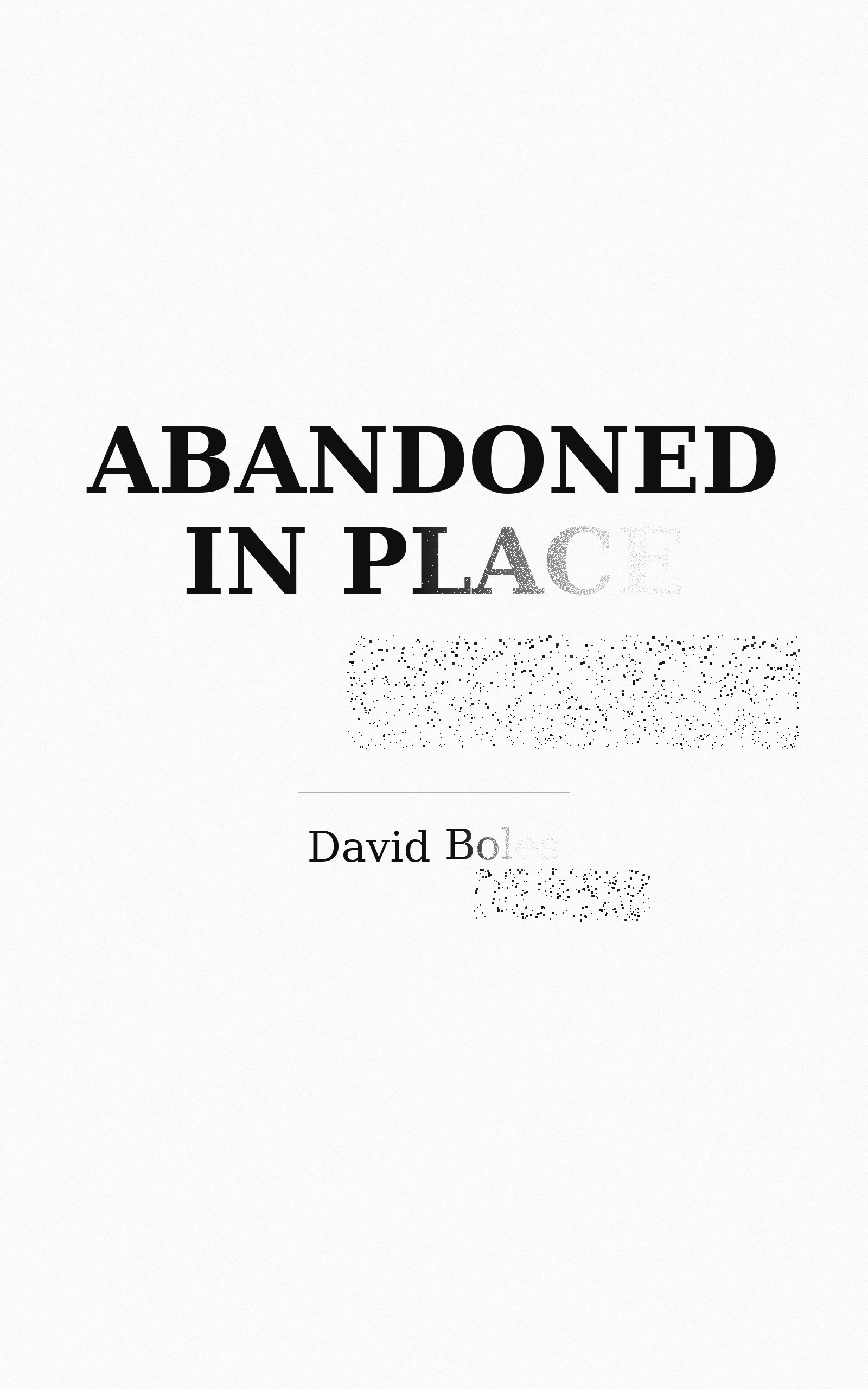
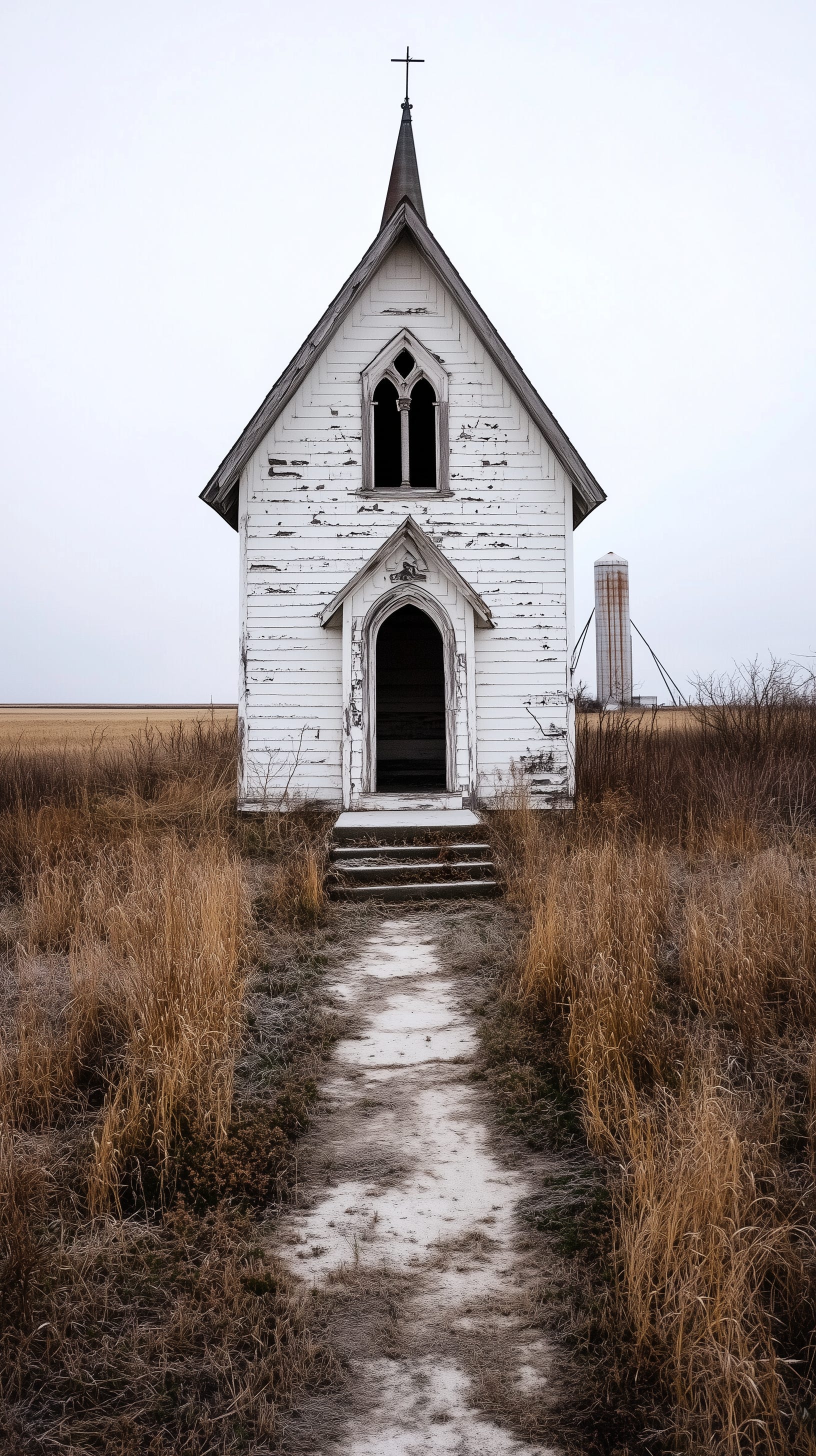
My new book, Abandoned in Place, began in part on this landscape. The institutional chapters examine the church, the school, the factory, and the government, and in each case the Great Plains provided the clearest examples, because the Great Plains is where the pattern is least obscured by the density and noise that metropolitan areas generate around their own abandonments. When a parish closes in New York, the building becomes a condominium and the loss is absorbed into the real estate cycle. When a parish closes in a Nebraska town of eight hundred people, the building sits empty on the main street and the congregation, which was also the volunteer fire department’s auxiliary and the food bank’s organizing committee and the only place in town where a person could sit in a room with other people and be known by name, does not reconstitute elsewhere. It is gone. The function departed. The structure remains.
The book’s argument is that this pattern operates everywhere, from the personal to the political, but the Great Plains is where the argument is most physically, visually, undeniably present. You can see it from the highway. You can see the school that closed because the tax base eroded because the factory left because the trade agreement permitted the production to relocate because the board of directors calculated that the relocation would increase shareholder value. Each step in that chain was performed by a specific actor making a specific decision, and each step was narrated in the passive voice: the jobs were lost, the community declined, the school was consolidated, the demographics shifted. The passive voice removes the actor from the sentence. The Great Plains removes the camouflage from the passive voice, because on the Great Plains there is nothing to hide behind. The empty building is the empty building. The notation on the map is the notation on the silo. Abandoned in place.
Prairie Voice readers will recognize the institutional chapters as extensions of the reporting this publication has done for years. The Lexington story appears in the factory chapter. The Ogallala appears in the same chapter as a case of geological-scale extraction performed on a resource that was treated as inexhaustible until it was not, narrated in the same grammar of inevitability that narrates every other abandonment in the book: the aquifer is declining, as if the aquifer were declining on its own, as if the center-pivot irrigation systems that draw from it were forces of nature rather than machines purchased by specific operators and subsidized by specific policies and permitted by specific regulatory frameworks that could, at any point, have been designed differently.
The book goes further than the reporting, because the book connects the institutional pattern to the personal one. It begins with a child in a small midwestern town whose father left on the sixth day of the child’s life and whose community reclassified the remaining family as broken. It traces the child’s adaptation through attachment theory, through the construction of what the book calls the “interior country,” through the refusal to accept the grammar’s account of what happened. And it argues that the child’s perception, sharpened by the original abandonment into a particular sensitivity to the gap between what institutions promise and what they deliver, is the same perception that reads the Great Plains landscape and sees not decline but departure, not inevitability but decision, not the weather of economic change but the specific, identifiable, reversible choices of specific, identifiable, accountable actors.
The book closes with a philosophical position rather than a policy prescription, because the position is what the evidence supports and the prescription is what the grammar demands. The grammar says: adapt. The grammar says: retrain. The grammar says: relocate. The grammar says: move on. The book says: no. The book says: the person who remains in the place where the function departed, who sees clearly what happened and who did it and refuses to accept the grammar’s account, is standing on the only honest ground available. The book calls this “sufficient ground,” and the phrase is meant to describe both a philosophical stance and a physical location, because the Great Plains, where millions of people continue to live and work and raise families inside structures whose promised functions have been withdrawn, is the largest stretch of sufficient ground in the country.
Abandoned in Place is available now as a Kindle eBook and paperback at Amazon, and as a free PDF download at BolesBooks.com. The book is published by David Boles Books Writing & Publishing.
David Boles is the author of Abandoned in Place and the publisher of Prairie Voice. He writes from New York City about the hidden systems, extracted resources, and abandoned covenants of the American interior.
PrairieVoice.com | BolesBooks.com | (212) 982-7700