

Storm chasing has evolved from amateur hobby to professional industry, and the Great Plains states have become its global headquarters.
The transformation began in the 1990s when television networks discovered that tornado footage drew massive ratings. Today, hundreds of professional chasers descend on Tornado Alley each spring, their economic impact rippling through rural communities that host this strange migration.
Reed Timmer, perhaps the most recognized name in storm chasing, represents the profession’s commercial evolution.
His Dominator vehicles, built for driving into tornadoes, cost hundreds of thousands of dollars to construct and maintain. His social media channels generate revenue through millions of followers watching prairie storms from the safety of their screens.
Discovery Channel contracts, speaking fees, and merchandise sales have turned weather observation into sustainable careers for dozens of chasers who follow similar models. The prairie’s atmospheric violence has become content, and content has become currency.
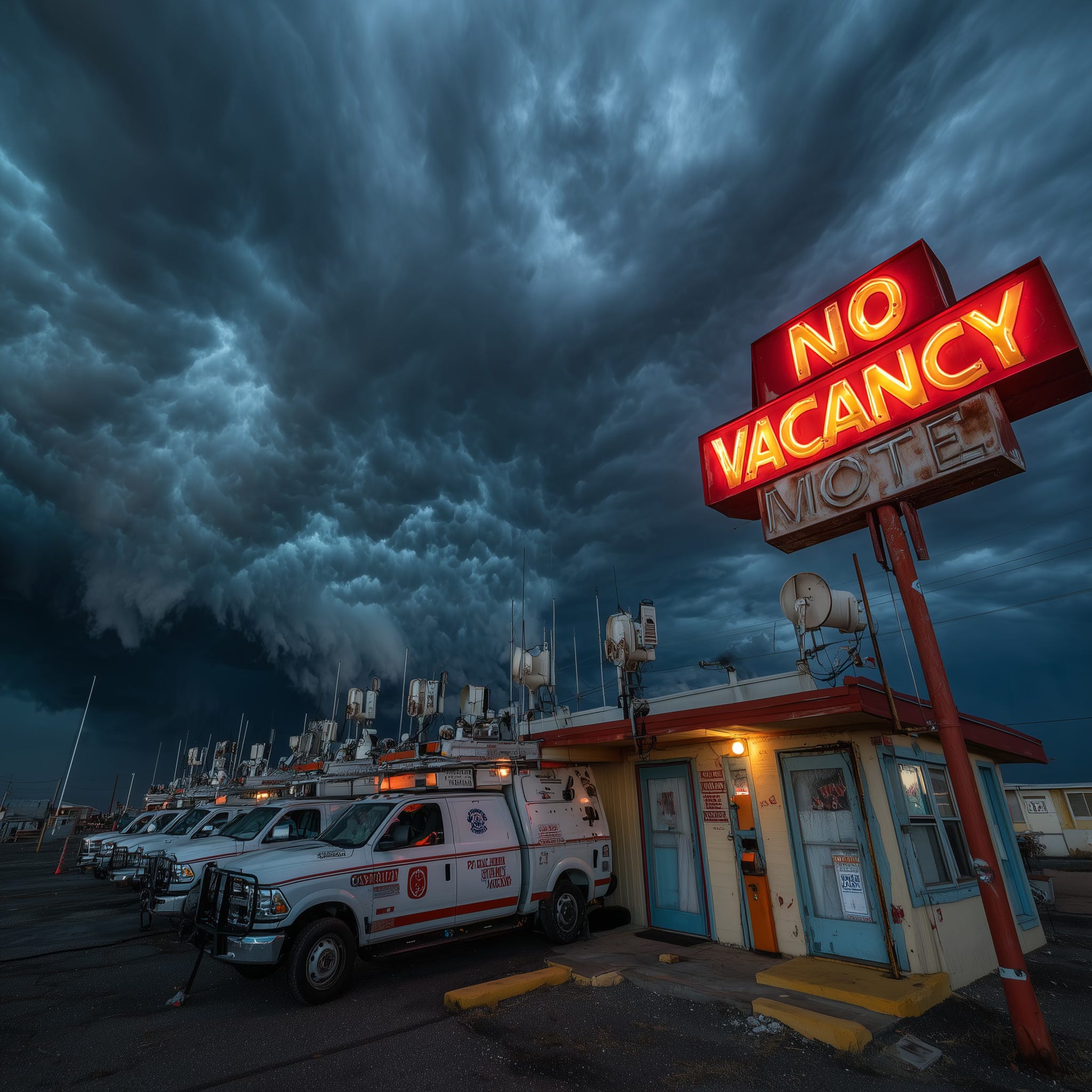
The economic ecosystem extends beyond the chasers themselves. Norman, Oklahoma, home to the National Weather Center, has developed an entire hospitality infrastructure around severe weather tourism.
Hotels report consistent seasonal booking patterns, with occupancy spiking during the traditional April through June storm season. Restaurants and gas stations along Interstate 35 and Interstate 40 through Oklahoma see predictable increases in traffic correlating with Storm Prediction Center forecasts. The correlation is so reliable that some businesses adjust staffing based on convective outlooks.
Tour companies now offer storm chasing vacations, charging thousands of dollars per person for week-long expeditions across the plains. Silver Lining Tours, Tempest Tours, and Extreme Tornado Tours bring international visitors to experience American severe weather firsthand.
These operations book blocks of hotel rooms months in advance, hire local guides, and purchase supplies from rural businesses that might otherwise see little tourist traffic. A single tour group can inject tens of thousands of dollars into small prairie communities over the course of a season.
The content economy around severe weather has grown exponentially with social media and streaming platforms. Live streamers broadcast storms in real time, generating revenue through super chats and subscriptions. Stock footage companies maintain libraries of tornado video, licensing clips to documentaries, news broadcasts, and educational programs worldwide.
The Weather Channel and other networks maintain agreements with experienced chasers for exclusive footage rights. What happens above prairie towns becomes global media product within hours.
Insurance companies and construction firms represent the reconstruction economy that follows severe weather. While their presence signals destruction and loss, their spending patterns significantly impact local economies. Insurance adjusters require extended accommodation, meals, and services during assessment periods. Construction companies, many based outside the affected areas, hire local workers and purchase materials from regional suppliers. FEMA disaster declarations trigger federal spending that flows through local contractors and service providers. The prairie has always rebuilt after storms, but now that rebuilding process itself has become an economic sector.
Academic research adds another layer to the storm economy. Universities send research teams to study tornadoes, their vehicles equipped with mobile radar units and atmospheric instruments worth millions. These expeditions require support services, accommodation, and local cooperation.
The data they collect improves warning systems and atmospheric understanding, but their presence also means grant money and institutional spending in rural areas that rarely see such investment.
The relationship between prairie communities and this economy remains complex. Residents whose lives and property face real danger watch as outsiders transform that danger into entertainment and profit.
Yet many also recognize that storm tourism brings money to regions struggling with agricultural consolidation and rural depopulation. The same atmospheric conditions that threaten their homes also attract attention and capital that might otherwise never reach their communities.
Some towns have attempted to formalize their relationship with storm tourism. The National Weather Festival in Norman draws thousands of visitors annually.
Storm chasing conventions in Denver and Norman bring together professionals and enthusiasts, generating conference revenue for host cities. Museums and educational centers dedicated to severe weather have opened across Tornado Alley, turning meteorological history into tourist attractions.
The ethical tensions persist without easy resolution. Chasers provide valuable real-time information that supplements official warning systems, potentially saving lives through their ground-truth observations. Their footage educates the public about severe weather dangers and supports scientific research.
Yet their presence during active weather events can complicate emergency response efforts, and the spectacle aspect of storm chasing sometimes overshadows the human cost of severe weather.
Weather violence has always defined prairie life, shaping architecture, agriculture, and community practices. What’s changed is the transformation of that violence into a media product consumed globally.
The prairie doesn’t just endure its storms anymore. It packages them, broadcasts them, and profits from them through an economy that didn’t exist a generation ago. The sky that threatens also provides, creating jobs and revenue streams from the very instability that makes prairie life precarious.
When storm season ends and the chasers depart, prairie communities return to their quieter rhythms. But they know the cycle will repeat, that next spring will bring another migration of people seeking to witness and document atmospheric violence. The prairie has learned to expect them, accommodate them, and extract whatever economic benefit it can from their presence.
In this arrangement, everyone gets something: chasers get their footage, tourists get their thrills, researchers get their data, media companies get their content, and prairie towns get an injection of capital into economies that need every dollar they can attract.