

In Valley County, Nebraska, the old courthouse records tell stories the families never would. Probate files from the 1950s and 1960s document farm transfers that skipped generations, children written out of wills without explanation, property boundaries redrawn after deaths that occurred under circumstances listed simply as “accident” or “natural causes.” The paperwork is meticulous. The silences are louder.
Every prairie community has its unspoken histories. The suicide that became “an accident with the shotgun.” The pregnancy that arrived too soon after the wedding, or too soon after the husband left for Korea. The child who looked nothing like the father but carried his name anyway. The grandmother who never spoke of what happened in her first marriage, and whose children learned not to ask.
These silences were not failures of communication. They were deliberate architecture. Families built structures of not-knowing as carefully as they built barns, understanding that some truths would destroy what they were trying to preserve. The question was always whether the silence would hold, and for how long.
Science now suggests it cannot hold forever. The body keeps records the family Bible omits.
Rachel Yehuda’s research at Mount Sinai, published in Biological Psychiatry, documented altered cortisol profiles in the adult children of Holocaust survivors. These children, born after the war, showed stress hormone patterns that distinguished them from matched controls. Brian Dias at Emory trained mice to fear a specific scent by pairing it with electric shock; their offspring, who had never been shocked, showed heightened startle responses to that same scent. Their grandchildren did too.
The mechanism is called transgenerational epigenetics. Trauma does not rewrite the genetic code, but it annotates it. Methyl groups attach to specific locations on DNA, silencing genes that were active or activating genes that were silent. These annotations can pass to children and grandchildren through mechanisms we are only beginning to understand.
The prairie grandmother who survived something terrible in 1943 may have passed more than property to her descendants. She may have passed the chemical signature of that survival, written into the cells of children she had not yet conceived.
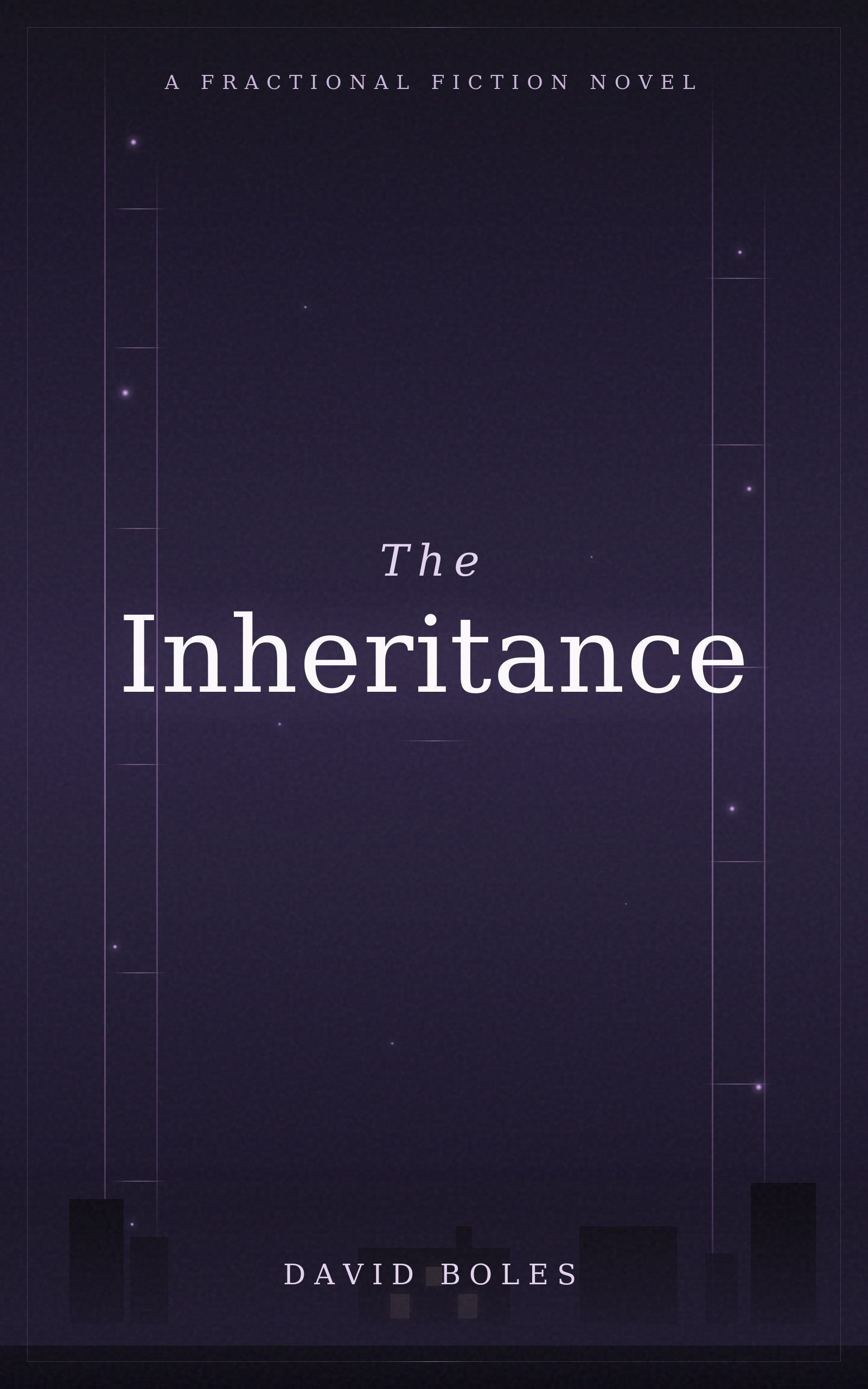
This is the territory of “The Inheritance,” a novel that takes the hidden histories of prairie families and examines them through the lens of contemporary science. The protagonist is an epigeneticist named Anna Osborne who studies transgenerational trauma in laboratory mice at a Cambridge research facility. She has built her career on professional distance, on the clean methodology of controlled experiments. Then her mother dies, leaving behind a farmhouse in Nebraska and a confession that connects Anna’s research to her own bloodline.
The Vance Farm holds answers that three generations of women worked to bury. A death in the 1950s that was not what the county coroner recorded. A marriage that was not what it appeared. A child whose parentage was never spoken aloud. The silence was meant to protect. It became instead the inheritance.
The novel draws on three works of dramatic literature, all now in the public domain: Shakespeare’s “Hamlet,” Ibsen’s “Ghosts,” and O’Neill’s “Desire Under the Elms.” These plays understood something about family inheritance that science is only now confirming. The Ghost demands that Hamlet act on knowledge he did not seek. Mrs. Alving watches her son develop his father’s disease and understands too late that silence was not protection but poison. Eben and Abbie destroy themselves on a New England farm where land and blood and transgression cannot be separated.
The dramatic architecture of these plays provides the structure. The epigenetic research provides the mechanism. The prairie provides the setting, because the prairie has always been territory where silence spreads easily across vast distances, where families could bury their histories in soil that asked no questions.
“The Inheritance” is the second novel in the Fractional Fiction series, following “The Dying Grove,” which examined distributed consciousness through the lens of mycorrhizal network research. The method is consistent: take public domain literary works whose questions have not been answered, fuse them with contemporary scientific understanding, and rebuild them for the present.
This particular novel speaks to something the prairie knows but rarely discusses. The families that settled this land brought their histories with them, and those histories did not stop at the property line. What the grandparents experienced shaped the parents who raised the children who now work the land or left it. The inheritance was never just acreage.
The old-timers understood this intuitively. They spoke of family traits that skipped generations, of children who had their grandmother’s temperament or their great-uncle’s darkness. They did not have the vocabulary of methylation patterns and cortisol profiles, but they recognized the phenomenon. Some things pass down that cannot be seen in the will.
“The Inheritance” is available through Amazon as a Kindle edition for $9.99 and paperback for $19.99. A free PDF is available at David Boles Books for those who prefer that format. The novel can be read without any knowledge of the Fractional Fiction methodology or the source plays. It stands as a story about a woman who must decide what to do with knowledge she did not seek, in a family that built its survival on strategic ignorance.
The prairie silence held for three generations. The science suggests it was always going to surface. The question the novel asks is the same question every family eventually faces: what do we owe to truths that were buried to protect us, and what happens when we dig them up?
The courthouse records are still there, in Valley County and Custer County and all the other counties where families filed their paperwork and kept their secrets. The bodies that carried those secrets are in the cemeteries now, but the inheritance continues. It always does. The only question is whether we will learn to read what they wrote into us, and what we will do with the knowledge when we finally can.