

You are reading your Prairie Voice on Substack, which means you are reading it in a building with a pond in the basement.
The pond went in quietly. Substack switched on a scanner, powered by a detection company called Pangram, that lets any reader run any post, note, or comment over one hundred words through a verdict engine and receive a ruling on whether a machine wrote it. One tap, and the water decides. The platform framed it as transparency. I recognize it as older equipment than that, because I have spent the past year writing its biography.
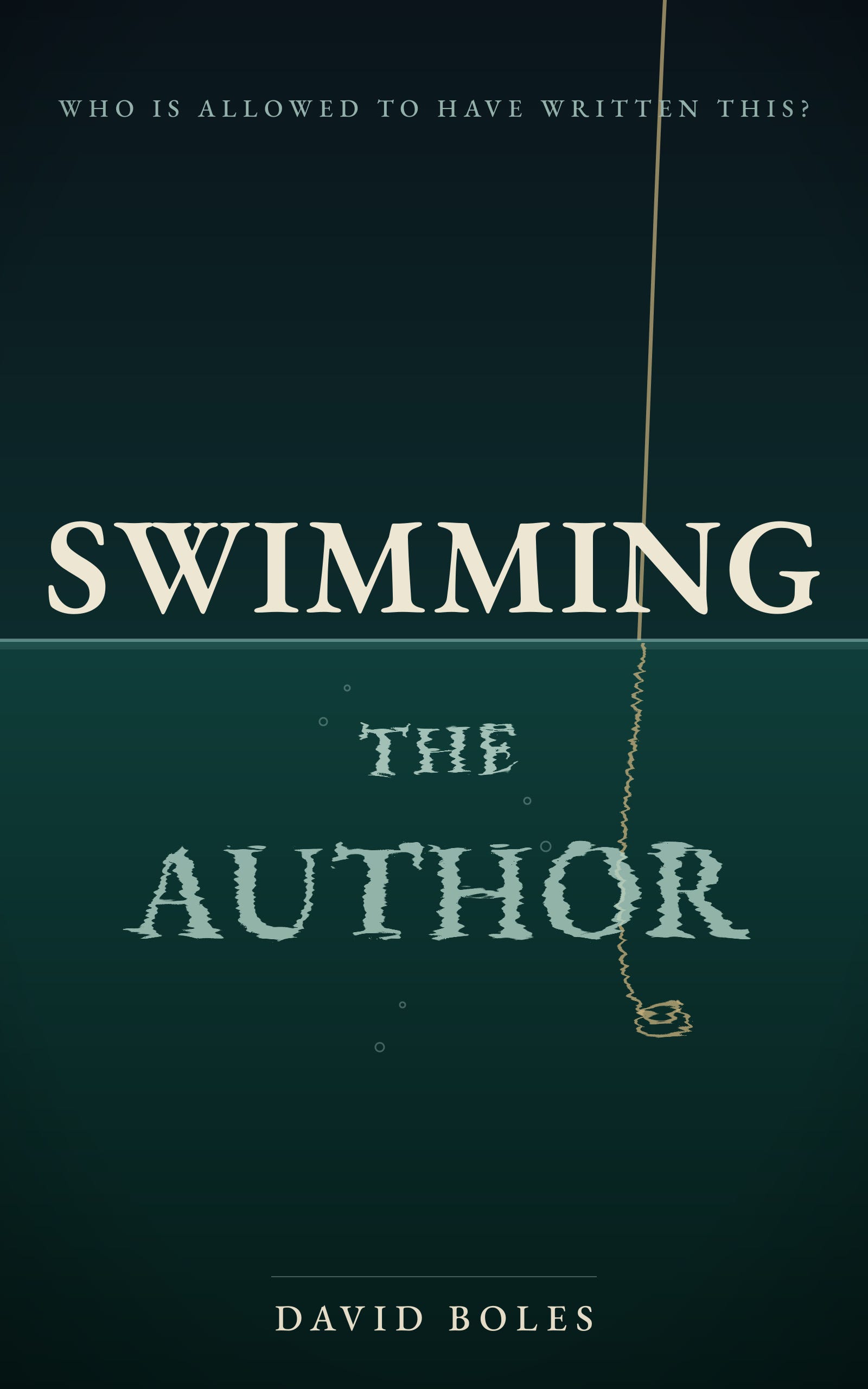
My new book is called Swimming the Author, and it is out now. It is a history of every instrument people have built to decide whether a writer wrote the writing: the ordeal by water that could only convict, the certificate eighteen Boston gentlemen signed in 1773 so Phillis Wheatley would be permitted to publish her own poems, the handwriting charts, the polygraph, the blood papers of Toledo and the Ahnenpass, the plagiarism scanner, and now the detector, which does with a percentage what the pond did with water. Fourteen chapters, full notes, a glossary, an index, and my own receipts declared on the first page. The timing was the season’s idea of a joke: while I was finishing a history of authorship verdicts, the platform under my own publication installed the newest verdict machine beneath every writer it hosts.
So let me tell you exactly what I have done about it, and exactly what it means.
I turned the scanner off for Prairie Voice. I will always, and forever, turn it off. Every publication I run on this platform, every post, every year, for as long as the setting exists. If Substack ever removes the setting, I will say so here, loudly, and act accordingly. This paragraph is the policy, dated and signed, and you may hold me to it the way my book invites readers to hold me to everything else.
Now the meaning, because the pond has trained people to misread the button. Turning the detector off is a courtesy I owe you, the reader. It says: I will hand you my writing directly, under my name, with my reputation attached, and I will never route your trust through a machine that neither of us can question. Anyone who reads that button as evidence of guilt has the geometry of the ordeal exactly backwards, and my book spends three and a half centuries showing where that geometry leads. The swimming test worked on the same reasoning: the innocent submit to the water, so refusing the water proves the charge. Once you accept that logic, the instrument never has to be right. Refusal convicts you, and submission puts your fate in equipment. The only sane relationship with a machine built that way is to stay on dry land and keep your paperwork in order.
My paperwork is in order. I keep dated drafts of everything, this article included, from first note to published page. The book opens with a section called A Note on Receipts that states my method and my stake, including the fact that I am a claimant in the certified class of Bartz versus Anthropic, the authors’ copyright case over the pirated libraries used to train the text machines. I lay that on the table myself so no reviewer gets to unveil it. A writer who demands receipts from four centuries of instruments owes his own, and mine will outlive any verdict a scanner cares to render on them.
Here is what the scanner actually is, from the book’s reporting, so the condemnation stands on the record, with my mood left out of it. Pangram is the strongest detector of its breed, an inference engine that keeps no registry of machine sentences and consults no database of the model’s output; it reads style and issues probability dressed as certainty. James Taranto at the Wall Street Journal ran columns against the strongest detector, columns drawn from the vendor’s own published research set, and watched the verdicts wander. Arvind Narayanan, the Princeton computer scientist who co-wrote AI Snake Oil, accepted the vendors’ claimed accuracy whole, ran the arithmetic forward honestly, and showed what a low error rate becomes when you multiply it across millions of honest submissions: a machine for manufacturing false accusations at industrial volume. An Atlantic essayist took a passage that had drawn a verdict of one hundred percent machine confidence, ran it again, and printed the contradiction. A novelist ran her own unpublished sentences through the free tier and watched the detector highlight in yellow, as machine-assisted, a sentence she had written herself. And the finding that should end every argument about the Substack rollout: Pangram’s own 2024 technical report pleads against deploying the classifier as a lone arbiter of integrity. The manufacturer begged the world in writing to never use this instrument the way Substack now invites eleven million readers to use it, one tap at a time, with no hearing attached.
That is the condemnation, and it is precise. My quarrel is with the deployment. Substack took an instrument whose own maker disclaims verdict duty, bolted it to the reading page, and deputized every subscriber as a dunking magistrate. The platform that markets itself as the home of the independent writer installed a suspicion machine under each of us and called it a feature. A publishing house that respected its writers would have read the technical report first, and then read my second chapter.
I owe Substack some fairness, so here it is: the impulse behind the button is real. Readers are drowning in machine sludge, they want to know a person is home, and the hunger for proof is honest. My book takes that hunger seriously for fourteen chapters, and what finally feeds it is provenance: names, stakes, drafts, dates, corrections in the open, a writer who can show you the childhood of any paragraph and a reader who knows where to knock. That is what Prairie Voice offers instead of a scanner. Ask me how any piece of mine was made and I will show you the notebook. That covenant is worth more than a percentage, and unlike a percentage, it cannot be reverse-engineered by the next generation of sludge.
Phillis Wheatley needed eighteen signatures at the front of her book before the world would let her be its author. I think about her every time I look at that setting in my dashboard. The scanner is the attestation demanded in reverse: where she had to assemble worthies to vouch her in, we are now invited to keep a machine on retainer to vouch us out, post by post, forever. She had no choice in 1773. I have one in 2026, it is a button, and I have pressed it. Pressing it is the most respectful act available to me on this platform, because it replaces a verdict engine with the only warranty that has ever meant anything in publishing: a name, in the open, with everything to lose.
The book that taught me to see the button this way is called Swimming the Author. It is available today in paperback and on Kindle, at BolesBooks.com and everywhere Amazon reaches, with the audiobook on the way. If you read Prairie Voice, you are the reader I wrote it for: someone who wants the history under this strange season, told with receipts. It ends on a four-word sentence I spent the whole book earning, and since you have just watched me press the button, you already know I mean it.
So does Prairie Voice. The water can wait forever.