

The State of Washington has an official term for a child in its custody who has nowhere to sleep tonight. The term is placement exception. It covers a night in a hotel with a caseworker in the next bed, a night on a cot in a state office building, a night, before a federal judge stopped it, in a car. The Office of the Family and Children’s Ombuds has counted these nights for years, and the counts are public record: hundreds of children a year, more than eighteen hundred such nights in a single reporting year, some children logging twenty or more, one child logging a hundred and twenty-six. In 2021, three children who had spent more than five hundred of those nights among them became the named plaintiffs in a federal class action, and a judge in the Western District of Washington ordered the state to find those children actual beds. The reporting since, from the ombuds and from InvestigateWest, says the shortage did what shortages do in rural systems. It persisted.
Readers of this publication know the shape of that sentence, because it is the shape of every story we track. A public obligation, a thinning map, and a gap where the map runs out. Rural counties feel the gap first and hardest, because the licensed bed, like the large-animal veterinarian and the maternity ward and the grain elevator, has been consolidating toward the cities for decades. What fills the gap is what always fills the gap out here: somebody local, somebody capable, somebody already awake.
Now put that ledger next to a different one.
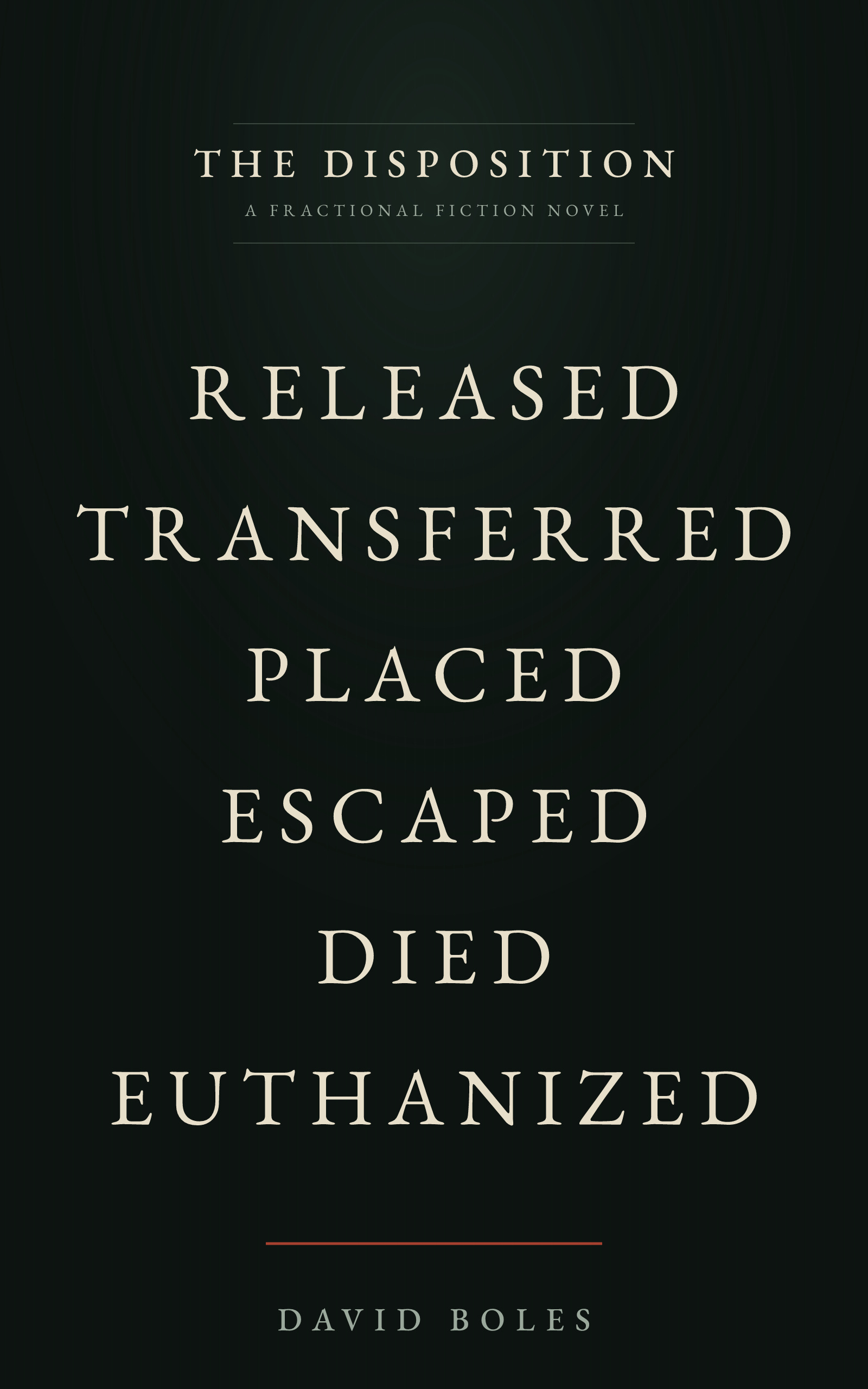
There is a second recordkeeping system running quietly through rural America, and almost nobody who has not carried an injured owl in a laundry basket knows it exists. Wildlife rehabilitation in this country runs on permits, and the permits run on volunteers: private people, mostly women, mostly rural, who convert their own barns and back acreage into licensed facilities, pay their own feed bills, and file an annual return with the state accounting for every animal that crossed their threshold. The accounting has a column. The column is headed Disposition, and it is filled from a fixed vocabulary of six words: Released. Transferred. Placed. Escaped. Died. Euthanized. One word per animal. That is the entire afterlife of the record. The system depends on these unpaid permittees the way rural fire protection depends on the volunteer department, which is to say entirely, and like the volunteer department they are invisible until the night you need one.
My new novel, The Disposition, is what happened when I put those two ledgers on the same table.
It is the eleventh book in the Fractional Fiction series, and it imagines a woman who has held a wildlife rehabilitation permit on a hill above Puget Sound for twenty-two years. Her green ledger carries four thousand one hundred and six ruled lines, one word each. And eleven of those lines belong to children, because in the novel, quietly, over two decades, her facility became the place a rural county brought children it could not place: after hours, between systems, when the map ran out. The county worker who brings the first child is not corrupt. She is out of options at one in the morning, and there is a light on at the top of a gravel road, and the woman who answers the door is capable, and already awake.
Let me be plain about the line between the ledgers, because the discipline of this series requires it. The placement exceptions are real, counted, litigated. Those six words are the actual vocabulary of the records, and the column is real. The arrangement in the novel, a wildlife permit absorbing the county’s unplaceable children, is invented, and no such arrangement exists on any permit I know of. That is the point of inventing it. Fiction gets to run the experiment the data can only gesture at: if the informal rural workaround ever met the after-hours child, what would the paperwork do? The novel’s answer is the coldest sentence I have ever built a book on. The paperwork would do fine. It always does.
The whole novel is one night. At five minutes to ten, a young woman sits down across the table and says almost nothing. At eight the next morning, a state Inspector will arrive with a form the law requires her to serve, and she will be polite, and she will take the records. Between those two clock points the woman tells all eleven children, one at a time, and underneath the telling sits one line in the green book that she falsified, in ink, on purpose. The engine of the book is the engine this publication has been documenting for years in other machinery: nobody in the story is lying, and nobody in it does anything wrong. A neighbor looks out a window. A man answers a question honestly. An inspector serves a form at the correct speed. Every operator is decent, and a child dies anyway, and a government record is false anyway. Villains are a comfort we do not get.
There is one more convergence in the novel’s ground that a Prairie Voice reader will feel before most. The treaty signed on the sand at Point No Point in 1855, and the 1974 case that made its fishing rights enforceable, sit under the book’s geography; a tribal biologist walks the woman’s hill with the quiet authority that ruling restored. That case was decided in the Western District of Washington. So was the placement-exception injunction, forty-seven years later, in the same courthouse system, weighing a different promise to a different set of children. The law can keep its word for a century when somebody makes it. This novel is about the rooms where nobody can make it, and the capable strangers who stand in the gap, and what standing there costs them, because the informal infrastructure of rural America has one universal feature: it works until it is discovered, and when it is discovered, there is no column for it.
The Disposition is out now in Kindle and paperback, with everything else, including questions for reading groups, at bolesbooks.com. It runs one night and ninety-eight thousand words, and it stands alone.
Two ledgers, then. One counts the nights the system had no bed. The other has six words and a blank line waiting. The book is about the woman holding the pen between them, and the country that handed it to her without ever writing her name down anywhere at all.