

Climb the right staircase in almost any Nebraska county seat and you will find the room this column is about. It sits on the second floor, over what used to be the hardware store or the dry-goods block, a high-ceilinged hall with a stage at one end, and for two generations it was called the opera house. The state historical society dates the phenomenon to the small towns of Nebraska between 1880 and 1920, and its own study of the buildings carries the most honest title in Great Plains scholarship: Second Floor, Brick Block. The National Register’s statewide survey of the type runs from 1867 to 1917, and a handful of the survivors still stand on that Register, from Gourley’s Opera House in Rushville, built in 1914, to the lodge-hall opera house the Odd Fellows raised in Hampton in 1893.
The name was aspiration, and everybody knew it. The historical society is plain about what actually played: most of the bill was popular fare, stock companies touring a summer’s repertory from September through May, with vaudeville slipping in between the acts and eventually taking over the evening. Frontier towns called the hall an opera house because they did not intend to remain frontier towns, and a room with that word painted on the window was a promise the town made to itself. Scholarship in Great Plains Quarterly maps the same buildings across Kansas, Nebraska, and the Dakotas: hundreds of second-floor halls, raised by merchants, over stores, on streets that had existed for twenty years.
The second floor also holds the book’s ghost story. The same records that document the halls document what emptied them: the Register’s forms list movies alongside the touring troupes, and the historical society traces the slide from stock company to vaudeville to the picture show. A projector cost less than a company of living bodies, it never missed a cue, and it played the identical show in every town on the line. Main Street ran the experiment my book examines a century before the streaming age made it universal: the recorded performance drove out the living one, house by house, and the town kept the room while losing the reason the room was built. One chapter of the book belongs to the only theatre that has survived that trade everywhere it has ever run, the room that keeps no copy, and the county seats staged the first act of that story.
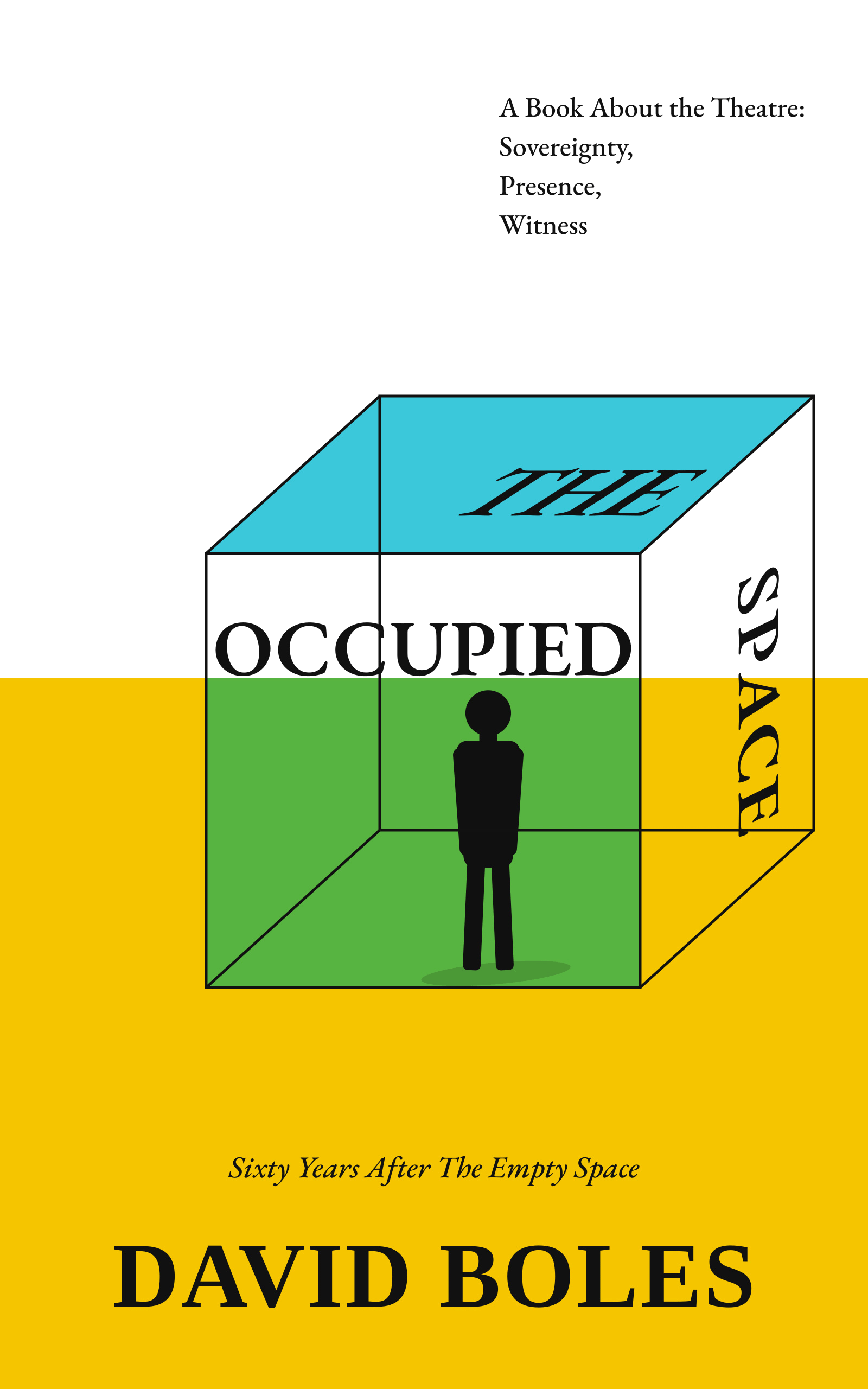
I bring all this up because every one of those rooms proves the argument of my new book before the book says a word. The merchant downstairs owned the floor. The town’s sense of itself set the bill. Subscription and ticket money paid for the gaslight. And the players who crossed that stage were flesh in front of their neighbors, on a winter night, with no second take. My book is called The Occupied Space: Sixty Years After The Empty Space, it is out now, and its whole case is sitting right there over the hardware store.
Sixty years ago the most celebrated director alive, Peter Brook, opened his famous book with a sentence the theatre memorized like scripture: take any empty space, call it a bare stage, and a man walking across it while somebody watches is all the theatre needs to be. My book answers him at the anniversary, and the answer is prairie knowledge. The floor was never bare. Somebody owns it, somebody polices it, and somebody pays for it, and the figure who crosses it can die while crossing, and the room knows. From that opening the book runs as a prosecution in twelve chapters and a coda, conducted with declared admiration and under one strict rule: zero quotation, every position paraphrased, so the argument stands without borrowing a sentence from the man it answers. Against his famous triad of repetition, representation, and assistance, I set my own: sovereignty, presence, witness. And at the center sits one engraved sentence I will defend in any county in this state: theatre is the art that requires someone who can die, present on a shared clock, in a room that keeps no copy.
The Lincoln thread in this is personal. My first paid byline arrived when I was ten years old, in Lincoln, and I have been arguing with the theatre in print ever since. Decades before me, another Nebraska writer ran the same apprenticeship in the same town: Willa Cather, drama critic for the Nebraska State Journal by 1894, whose reviews, the university’s Cather archive records, earned her a “meat-ax” reputation that frightened the touring companies coming through on the road. She learned the art in the 1885 Red Cloud Opera House, second floor, above the hardware store, and the Cather Center preserves her later remark to an interviewer that what she missed most in the little Nebraska towns was the opera house. The prairie has always trained its writers in that room. It trained her, and it trained me, and the training holds: watch the stage close enough, long enough, and you end up asking who holds the deed to it.
The book’s most practical chapter belongs to this landscape too. Chapter Twelve prices a first production out in the open, a small Nebraska town set against Manhattan, with the rights line at zero because the playwright is standing in the room, and a current costing, refreshed as the rates move, stays posted at UnitedStage.com. The arithmetic says what the county seats already knew: the doctrine is cheapest to prove where the floors already exist. And the floors exist. The Red Cloud house that trained Cather has been restored by the National Willa Cather Center and runs a full performance season this minute, which means a working stage from the 1880s is taking bookings while the coastal theatres debate whether the art has a future.
The Occupied Space: Sixty Years After The Empty Space is available now, in Kindle and paperback at Amazon, and as a free PDF edition at BolesBooks.com, beside everything else in the catalog. The doctrine it argues, Playwrights Must Direct, has stood at UnitedStage.com since 1995, and the book is the long case for it: the history, the trial, the verdict, and a working day inside the answer.
Sixty years ago a famous book said the theatre begins with a bare floor and a watcher. Out here we knew the older truth: before anybody crosses a floor, somebody has to build one, and the building is the promise. We built ours over the hardware store. The stairs are still there.