

Four hundred Minuteman III intercontinental ballistic missiles sit in underground silos across Montana, North Dakota, Wyoming, Colorado, and Nebraska. Each can deliver nuclear warheads to targets six thousand miles away in under thirty minutes. Above them, farmers plant wheat and soybeans.
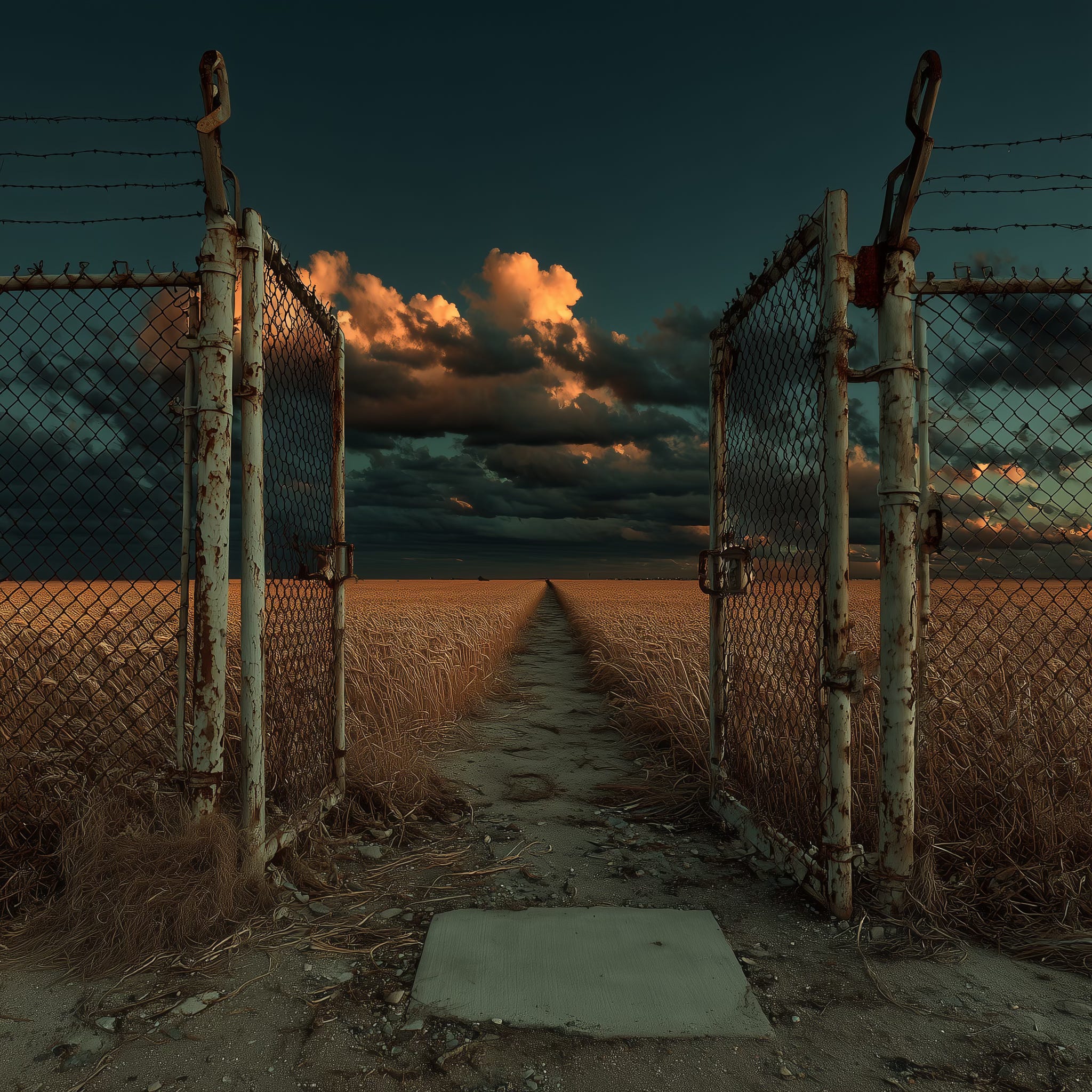
Cattle graze. The same families who have worked this land for generations harvest around chain-link enclosures that mark each site. The American prairie hosts the land-based leg of the nuclear triad, making these rural counties strategic military assets.
The farmers who own land above these silos receive annual easement payments from the Air Force for the acre or so each installation requires.
They work around the sites, avoiding the access roads that military contractors use for maintenance. After decades, most treat the missiles as permanent fixtures, no different from power lines or county roads. The weapons have integrated into prairie infrastructure to the point of invisibility.
Malmstrom Air Force Base in Montana, F.E. Warren Air Force Base in Wyoming, and Minot Air Force Base in North Dakota each oversee their designated missile fields. Launch control centers sit sixty feet underground, where pairs of officers work twenty-four hour shifts in windowless capsules.
These missileers maintain constant readiness to execute launch procedures if ordered. Buried cables connect their stations to the silos scattered across thousands of square miles of farmland and ranches.
The nuclear mission brings federal employment to regions where jobs paying middle-class wages have grown scarce. Security forces, maintenance crews, communications specialists, and support staff all draw paychecks tied to keeping these weapons operational. Great Falls, Montana, population sixty thousand, depends significantly on Malmstrom’s economic impact.
Minot, North Dakota, calls itself “Magic City” but its economy relies heavily on the air base. Cheyenne, Wyoming, has tied its fortunes to F.E. Warren since the base transitioned from cavalry post to missile command.
Air Force personnel from across America find themselves stationed in these prairie communities. Some discover they prefer the space and quiet after growing up in cities. They buy houses, start families, and stay after their service ends. Others struggle with the isolation and winters.
This military presence creates demographic patterns unusual for rural areas, bringing college-educated professionals to towns built on agricultural economies.
The missiles themselves are machines from the 1960s, though their guidance systems and warheads have received updates. The silos were engineered to withstand nuclear attack, protecting the missiles long enough to launch a counterstrike. This Cold War infrastructure now seems as permanent as the buttes and badlands that define the northern prairie landscape.
The weapons remain on alert despite the Soviet Union’s dissolution three decades ago.
Peace activists maintain regular protests at these installations. Catholic Workers, Quakers, and indigenous activists commit civil disobedience at silo sites, resulting in federal trespassing charges. Sister Ardeth Platte, who died in 2020, spent years in federal prison for symbolic protests at missile silos. Father Carl Kabat, before his death in 2021, was arrested dozens of times for similar actions. These protests continue but rarely attract media attention anymore.
The relationship between Native tribes and missile fields remains tense. The missile fields in North Dakota sit near the Fort Berthold, Standing Rock, and Turtle Mountain reservations. In Montana, installations occupy lands near the Fort Peck, Fort Belknap, and Rocky Boy’s reservations.
These weapons protect a nation built on lands taken from these same tribes, a fact not lost on tribal members who live with nuclear weapons as neighbors.
The Air Force plans to replace the aging Minuteman III system with new Sentinel missiles, a program facing cost overruns and delays. Current estimates suggest the program could cost $160 billion or more.
This modernization ensures nuclear weapons will remain beneath prairie soil for decades to come. The same communities that have hosted these weapons since the Kennedy administration will continue their economic reliance on nuclear deterrence through the rest of this century.
Rural highways across the northern Great Plains pass unmarked access roads leading to these sites. Unless you know what to look for, the installations remain invisible. A small concrete slab, a chain-link fence, an occasional security vehicle - these are the only hints of what lies beneath. The prairie’s vastness absorbs even nuclear weapons into its landscape, hiding world-ending capability beneath the most ordinary American scenery.
The nuclear prairie exists as an open secret. Everyone knows the missiles are there, but daily life proceeds as if they aren’t.
School buses pass silo sites on their morning routes. Farmers check crops within sight of installation fences. Pizza delivery drivers from base towns know which unmarked roads lead to launch control facilities. The presence of nuclear weapons has been normalized through repetition and time, becoming another fact of prairie life like blizzards or drought.
This arrangement poses questions that go unasked because they have no good answers.
Agricultural communities had no vote on becoming nuclear targets. The placement of these weapons followed military logic about dispersal patterns and surviving first strikes, not democratic consultation with affected populations. Now, three generations later, these communities cannot imagine their economies without the missile mission.
The weapons they never asked for have become essential to their survival, creating a dependence that makes protest seem economically suicidal.
When maintenance crews service these silos, they work on machines designed to delete cities from existence. When farmers plant around these sites, they’re cultivating land that Russian targeting computers have marked for destruction since before those farmers were born.
When families drive past these installations on their way to church or school, they’re navigating a geography that exists simultaneously as home and as battlefield. The prairie holds these contradictions without resolution, its vastness capable of containing even the infrastructure of annihilation without appearing to change.
The missile fields represent the most extreme form of prairie invisibility. Not the invisibility of being overlooked or forgotten, but the invisibility of something so terrible that acknowledging it would make normal life impossible.
So the missiles wait in their silos, the officers wait in their capsules, and the prairie continues its seasons above them, growing food on the same land that harbors the capacity to starve the world.