

Every county courthouse in Nebraska holds the same story in different handwriting. The deed books start clean in the 1860s and 1870s, recording transfers from the federal government to individual homesteaders. The legal fiction is orderly: the United States owned the land, the United States conveyed the land, the homesteader improved the land, the land passed to heirs. The paperwork is immaculate. The reality is not.
Before the deed books, there were treaties. The Treaty of Fort Laramie in 1851 recognized Lakota, Cheyenne, and Arapaho territory across the northern plains. The Treaty of 1868 established the Great Sioux Reservation. The agreements were signed, ratified, and then systematically dismantled. By 1889, the reservation had been broken into smaller units. By 1934, two-thirds of allotted land had passed out of Indigenous hands through sale, tax forfeiture, and fraud. The deed books do not record this history. They begin after it, as if the land had no prior owners, as if the transfers started from nothing.
This is the hidden ledger that every Nebraska farm family carries whether they acknowledge it or not.
The Dawes Act of 1887 broke communal reservation land into individual allotments of 160 acres, the same size as a homestead claim. The explicit purpose was assimilation: turn Indigenous people into individual farmers, erase collective land tenure, open “surplus” land to white settlement. Senator Henry Dawes believed he was helping. “The defect of the [reservation] system,” he wrote, “was apparent. They have got as far as they can go, because they own their land in common.” Private property, he believed, would civilize.
The results were predictable. Allottees who received land often lacked capital to farm it. Tax assessments accumulated. Land speculators waited. Within a generation, millions of acres had transferred from Indigenous allottees to white farmers and ranchers. The legal mechanisms were proper. The outcomes were not accidents.
In Valley County, Nebraska, the pattern is visible in the records if you know how to read them. The original allotments from the 1890s. The tax sales from the 1910s and 1920s. The consolidation into larger farms by the 1940s. The names change, but the acreage totals tell the story: Indigenous landholding shrinking, white landholding expanding, until the original allotment map becomes unrecognizable.
This history does not appear in most family stories. The Bohemian families who settled the Loup valleys remember the sod houses and the grasshoppers, not the allotment sales that made their homesteads possible. The German-Russian families who fled the Volga remember the conscription and the broken promises, not the reservations that were broken to make room for them. The Irish families remember the famine and the coffin ships, not the removals that cleared the land they eventually farmed. Each group carries its own trauma. None carries the full ledger.
I have written a novel that attempts to hold the full ledger open.
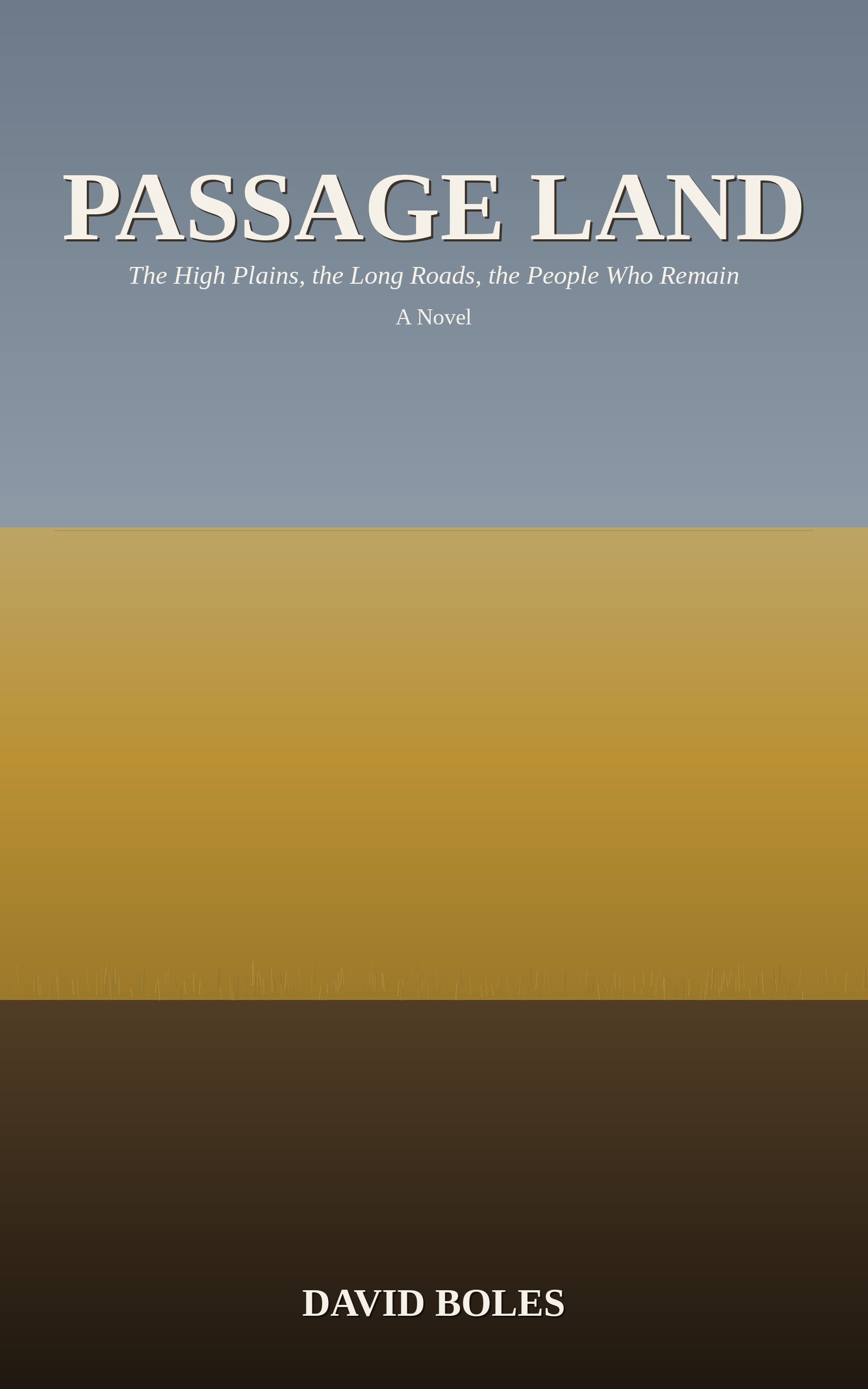
Passage Land spans 160 years on the Nebraska prairie, following three families whose histories intersect on the same ground. The Vogels, German-Russians who arrived in the 1870s. The Callahans, Irish who arrived in the 1880s. The Walking Aheads, Lakota who were already there and remained after everyone else arrived. The novel tracks what each family owes, what each family remembers, and what happens in 2024 when the debts finally come due.
The title refers to the Lakota understanding of land tenure: that humans pass through land rather than possessing it, that our tenure is temporary and our obligations extend beyond our lifespan. This stands against the homesteading logic that built Nebraska, the conviction that land can be owned, improved, and transmitted as property. Both frameworks still operate. Both still shape how Nebraska families relate to the ground beneath their feet.
The novel does not resolve this tension. Resolution would be false. What it does is dramatize the consequences of carrying unacknowledged debt across generations, and ask what happens when someone finally decides to open the books.
Ruth Walking Ahead, one of the novel’s central characters, tells Robert Vogel something that should haunt every family whose deed traces back to allotment-era transfers: “Sharing is not return.” The statement refuses easy reconciliation. It insists that acknowledgment is not payment, that presence does not constitute restitution, that some debts cannot be settled but only carried.
The county courthouses still hold the records. The allotment maps are archived. The tax sale notices are preserved. The evidence of what happened is not hidden, merely unexamined. The land holds its history whether we read it or not.
Passage Land is available through David Boles Books and Amazon. The questions it raises are available to anyone willing to visit their county courthouse and read the deed books from the beginning, before the transfers look clean, before the paperwork becomes immaculate, before the legal fiction obscures what actually occurred.
The prairie remembers. The question is whether we are willing to remember with it.