

The sign for Miller’s Mercantile is the color of rust and faded sky. It hangs from one hinge, swaying in the constant wind that scours everything flat along Highway 83. The town of Alston, population forty seven, exists as a brief interruption in the horizon line. You can miss it if you blink.
But you cannot miss Miller’s. It is the town’s anchor, a low slung brick building whose windows are filled less with merchandise and more with the collected dust of ninety years.
Inside, the air smells of oiled floorboards, coffee, and cardboard. Arden Miller stands behind a counter of scarred oak, the same one his grandfather built in 1928. His hands are thick and mapped with lines that have nothing to do with fortune and everything to do with fixing a generator in a blizzard or hauling feed sacks.
He moves with a slow economy, a man who has learned not to waste a single motion. The floorboards creak in a familiar pattern under his worn boots. He sells motor oil, bread, postage stamps, and work gloves stacked next to candy bars, a testament to the store’s dual role as a place of both necessity and small comfort.
A farmer named Gus comes in, letting the screen door slam shut. The bell above it jingles, a sound unchanged since the Great Depression. He doesn’t ask for what he needs. He just holds up a broken fan belt from his combine, and Arden nods.
He disappears into the back rooms, a maze of shelves holding a jumble of inventory that follows a logic only he understands. While he’s gone, Gus pours himself a cup of coffee from the pot that is always on, leaving a dollar bill on the counter. This is how most transactions work at Miller’s, on a system of quiet trust that has outlasted droughts, recessions, and the slow exodus of the young.
Arden returns with a new belt. He knows its part number by heart. He also knows that Gus’s eldest son just left for college in Lincoln, and that his wife has been worried about the lack of rain. They talk about these things, their voices low and steady against the hum of the ancient beverage cooler.
This store is the place where news becomes common knowledge, where gossip is smoothed into concern, where a person’s trouble can be spoken aloud without judgment. It is the connective tissue for a community of people who spend most of their lives separated by miles of wheat and silence.
He remembers being a boy in this same space, stocking tins of soup while his father listened to a neighbor’s fears about a coming storm. His father had told him that they weren’t just selling goods.
They were selling reliability. People needed to know, he’d said, that one thing in their world would not change. One door would always be open. Arden had not understood the weight of those words then, but he feels it now in his bones. It is a quiet, heavy inheritance.
When the sun gets low, casting long shadows that stretch for miles, Arden stands in the doorway and watches the cars pass on the highway. Most do not stop. They are going somewhere else, somewhere bigger. He thinks about his own kids, both gone to cities where the lights never go out.
There is no bitterness in the thought, only a dull ache of acceptance, like a healed fracture that pains him when the weather turns. He is the keeper of more than a store. He is the keeper of a place, the last man standing in a long line of them. He turns, straightens the community notices tacked to a corkboard by the door, and locks the heavy wooden frame.
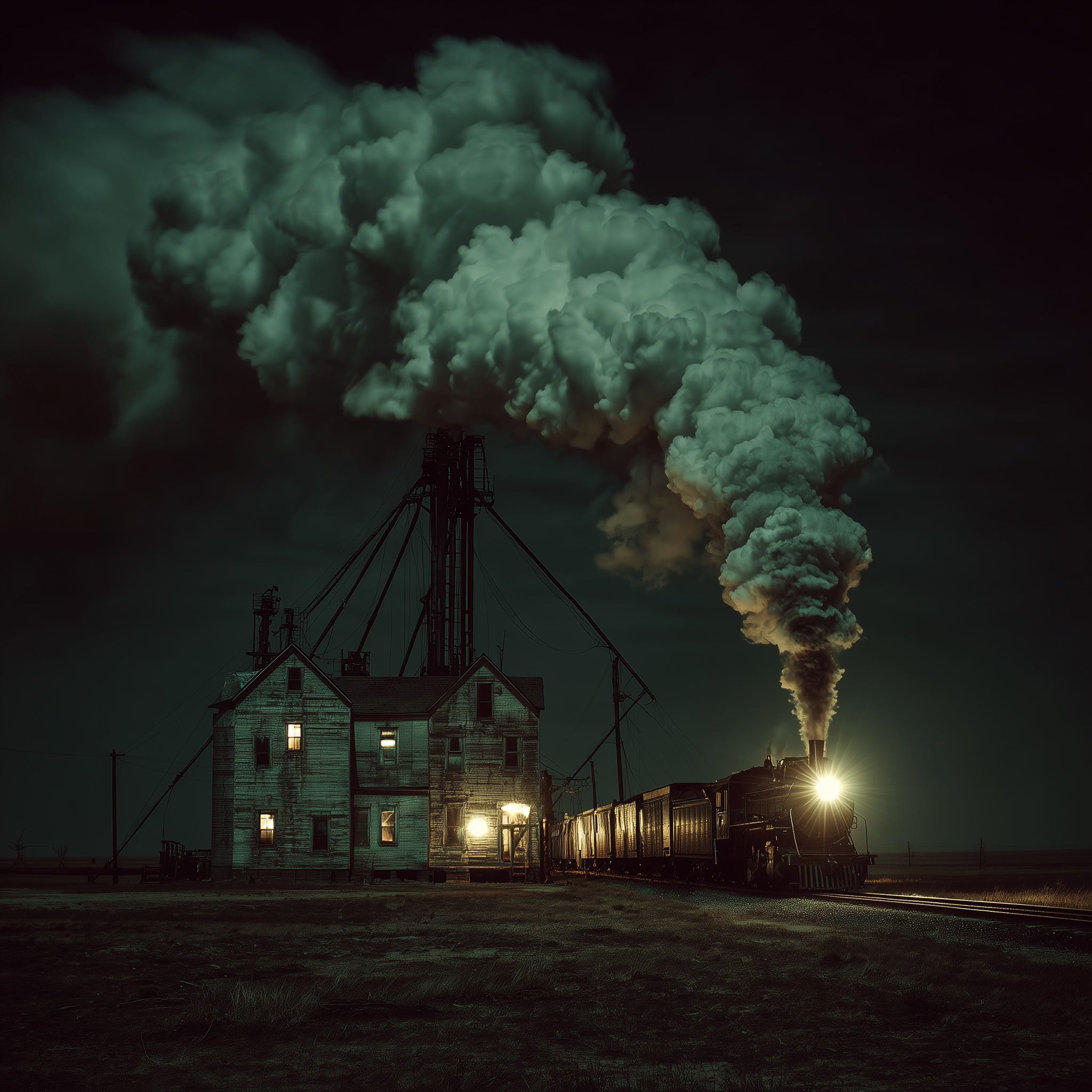
He leaves a single bulb burning in the window, a small point of light against the enormous, gathering dark.