

In the small towns where I grew up, there were children who vanished without leaving. They attended school for a few years, then they didn’t. They lived in houses at the edge of town, then they lived somewhere else. Nobody talked about where they went. The polite assumption was that their families had moved, had found opportunity elsewhere, had made choices that were none of our business. The less polite truth was that many of them had been taken: by the state, by the courts, by systems designed to manage children whose families had failed to meet some standard of acceptability.
Foster care is not a rural phenomenon or an urban one. It is an American phenomenon, and it operates on the same logic everywhere: children who cannot be kept become children who must be placed. The language is bureaucratic, the intention is sometimes good, and the result is a population of young people who learn early that they belong nowhere permanently. They are wards of the state, which is another way of saying they are wards of no one in particular.
The EleMenTs Series is set in New York City, in a group home for teenage girls. But the dynamics it describes would be recognizable in any county seat in Nebraska, any struggling town in Kansas, any place where the gap between families that function and families that don’t has been papered over with procedure. Elle, Meen, Teena, and Tal are fictional, but the system that shaped them is not.
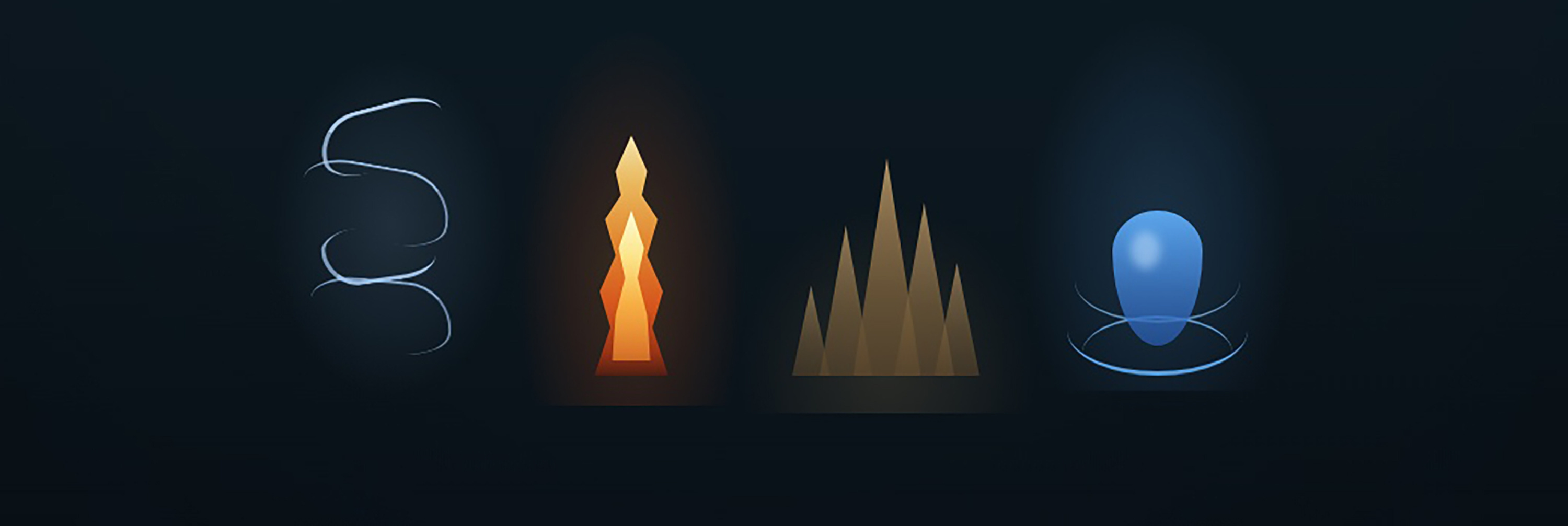
Elle is Deaf. Meen is blind. Teena has cerebral palsy. Tal has autism. In the logic of the foster system, these are categories, boxes to be checked, placements to be made more difficult. Disabled children cycle through more homes, stay longer in group settings, age out with fewer prospects. This is not because caseworkers are cruel. It is because the system was built to process children, not to raise them, and disabled children are harder to process.
The series gives these four girls elemental powers. Elle commands wind. Meen controls fire. Teena moves earth. Tal feels water. This is fantasy, obviously. But the fantasy illuminates something true: these girls have capacities the system never measured, strengths the intake forms never captured, value the placement algorithms never calculated.
In rural America, we have our own version of this blindness. We pride ourselves on self-reliance, on neighbor helping neighbor, on community bonds that don’t require government intervention. But we also have a long history of deciding who counts as a neighbor and who doesn’t. The family with the autistic son who makes noise during church. The household where the mother drinks and the children show up to school unwashed. The girl who walks differently, talks differently, doesn’t fit the pattern of what a young woman should be. These are the people who test our stated values, and we do not always pass the test.
The villains of The EleMenTs Series are not small-town gossips or overwhelmed caseworkers. They are corporations and senators, systems operating at a scale that makes individual cruelty unnecessary. Prometheus Applied Sciences wants to study people with abilities, to acquire them, to find out what makes them useful. The company doesn’t hate the girls. It doesn’t see them clearly enough to hate them. It sees assets, resources, problems to be solved or opportunities to be exploited.
This too is familiar. The agricultural corporations that bought out family farms didn’t hate the families. The medical systems that closed rural hospitals didn’t hate the communities they served. The logic of efficiency, of optimization, of treating people as inputs rather than ends, operates without malice because malice would require attention. The girls in The EleMenTs Series are not persecuted because they are hated. They are endangered because they are interesting to the wrong people.
The three books of the trilogy follow an arc from hiding to visibility.
Beneath the City takes place underground, in the tunnels beneath New York where the girls discover what they can do. They practice in secret because secrecy is survival. They trust each other because they have no one else to trust. The group home is not a family, but it is what they have, and from it they build something that functions like kinship.
The Invisible Hand introduces Prometheus directly. The girls are watched, studied, hunted. A fourth girl arrives, Tal, who completes the elemental quartet. The choice between hiding and fighting becomes impossible when hiding is no longer possible. By the end of the second book, the girls have been forced into the open.
The Reckoning moves to Washington. A Senate hearing on a registration bill. The question of whether people with abilities should be catalogued, tracked, made known to the government. The girls must decide whether to testify, whether to put their faces and their names on the public record, whether to trade anonymity for influence.
I think about this arc in terms of what I’ve seen in small towns. The families that kept their troubles private until privacy was no longer possible. The moments when what had been whispered became what was spoken. The decisions about whether to fight publicly or accept quietly. Rural communities are not more virtuous than other places, but they are smaller, and smallness means that visibility has consequences everyone can see.
The series does not pretend that visibility is simple liberation. Being seen makes you a target as surely as it makes you a person. The girls choose visibility, but they choose it knowing the cost. They emerge not because emergence is safe but because hiding has become untenable. This feels honest to me. This feels like how it actually works.
The EleMenTs Series is fiction, and it is fantasy, and it is set in a city I left decades ago. But I recognize the girls. I recognize the system that failed to see them clearly. I recognize the institutions that wanted to use them and the politicians who wanted to control them. I recognize the choice between disappearing conveniently and existing inconveniently.
In the small towns, we told ourselves stories about community, about taking care of our own, about values that the cities had forgotten. Some of those stories were true. But we also forgot people. We let children vanish into systems. We looked away from families that didn’t fit our picture of what families should be. We measured worthiness by standards we never examined and found some of our neighbors wanting.
The girls in The EleMenTs Series refuse to be forgotten. They refuse to vanish. They refuse to be assets or problems or case files. They have power, yes, but the power is almost secondary. What matters is that they insist on existing, on being seen, on taking up space in a world that would prefer they didn’t.
This is not a rural story, but it is a story about what rural America claims to value and often fails to practice. Community. Belonging. The dignity of every person regardless of what they can contribute to the economy. The idea that people are ends in themselves, not means to someone else’s profit.
The EleMenTs have arrived. They are Deaf and blind and disabled and autistic. They command the elements. They will not disappear.