

Before the radio gives its warning, the sky has already said its piece. You just have to know the language it speaks. Elias Thorne knows it. He sits on his porch, in a chair worn smooth by the shape of his own body over decades, and watches the afternoon.
He is not a man who talks to fill silence. His words are like well water, drawn up only when needed, and they are always cool and clear. His eyes, nested in a web of deep lines, are permanently narrowed from a lifetime of judging the distance to the horizon.
Today, he squints toward the west, where the sky is a clean, sharp line. To an untrained eye, it is a placid blue, flawless. But Elias sees the high, thin wisps of cloud, what he calls wind-devils, brushing the upper atmosphere.
He notes the way the swallows are flying low over the fields, their paths erratic and close to the ground, chasing insects that are also hugging the earth. The air itself feels wrong. It is still and heavy, holding its breath before a great sigh.
A stillness like this in late summer is not a sign of peace. It is a sign of a debt being called due.
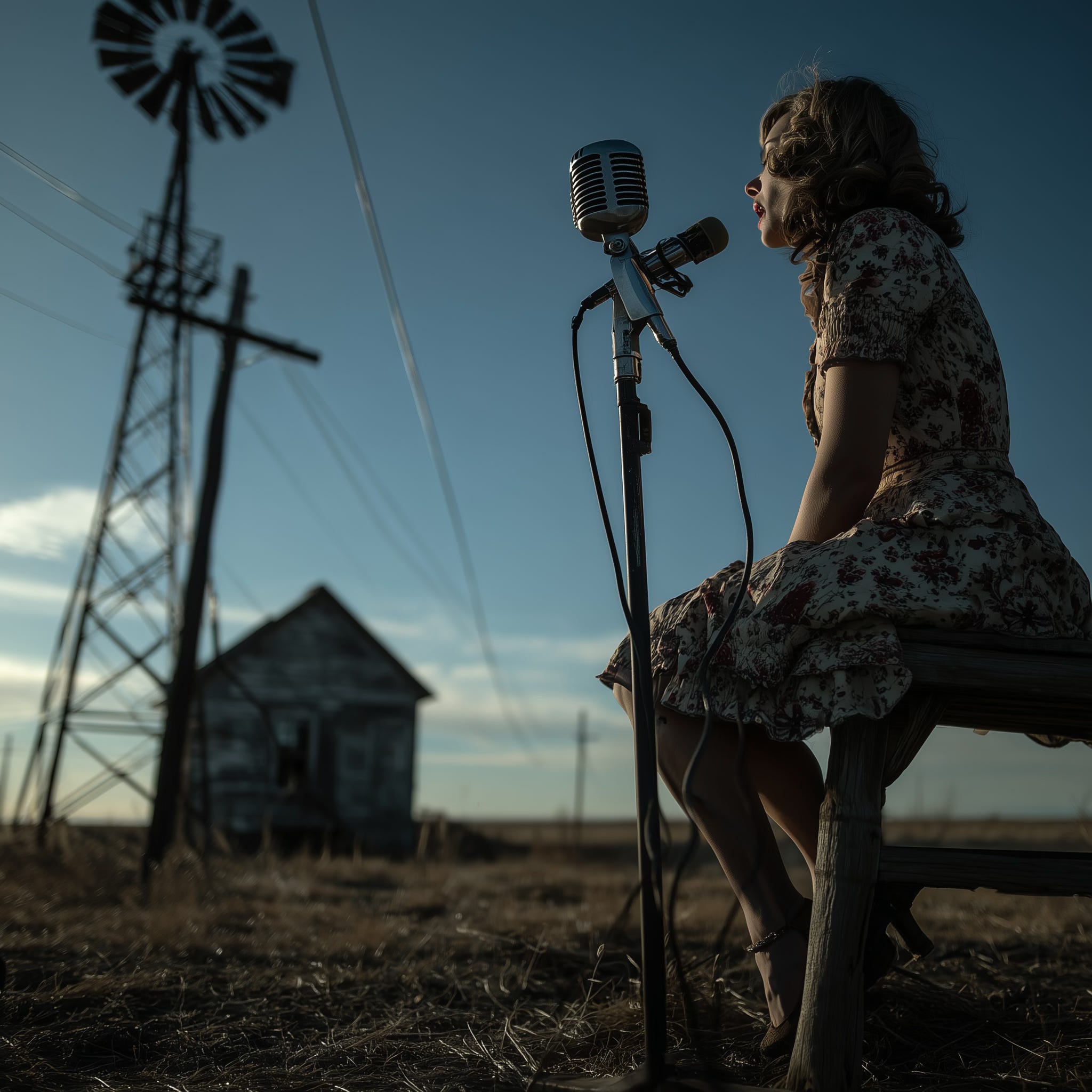
He points a gnarled finger toward the cottonwood tree at the edge of his property. The leaves, usually a placid green, are showing their silvery undersides as they twist in a breeze that is not yet strong enough to be felt on the skin. “The trees are telling secrets,” he says, his voice raspy from disuse.
“That’s the first sign. They hear the wind coming long before we do.
An oak will hold its leaves firm. A cottonwood will always tell on the wind.” He learned this from his father, who learned it from his. It is a knowledge passed down not in books, but in quiet moments of observation on porches just like this one.
This knowledge is a collection of truths. He knows that the deeper the red of the setting sun, the more moisture is being held in the air to the west.
He knows that when the crickets are loud and frantic in the evening, the night will be clear and cold. But when they fall silent, the air is too thick for them, too full of water.
This is a forecast his grandfather trusted to get the hay in before a summer downpour, a forecast more reliable than any barometer. It is a science of the senses, of noticing the small threads that connect everything in this vast, open space.
Modern forecasts offer probabilities, charts, and percentages. They are sterile and distant. Elias’s knowledge is intimate. It is the memory of a hailstorm in ‘78 that came out of a sky this same shade of milky blue.
The radio had spoken of a thirty percent chance of scattered showers. Elias had seen the cattle grouping together in the far pasture, their bodies facing away from a wind that did not yet exist. He spent two hours getting the herd into the barn.
The storm that followed shredded his neighbor’s barley into green ribbons and left craters in the fields. The hail fell with the sound of a thousand hammers on a tin roof. Survival here was never about outsmarting the prairie. It was about learning to listen to it.
He rises slowly and walks to the edge of the porch, sniffing the air like an animal. He smells the faint, earthy scent of rain on dry soil, a promise carried on a current that is miles away. Dust begins to stir on the long dirt road leading to the house.
The clean, sharp line of the horizon begins to blur, a smudge of deep gray appearing beneath the blue. “It’ll be here before dark,” he states. It is not a guess. It is a conclusion, reached from a lifetime of gathering evidence.
The sky is his almanac. As the first real gust of wind finally arrives to rattle the screen door, it does not feel like an arrival. It feels only like a confirmation of a conversation he has been having all day.