

The pattern is documentable: Elliott Smith spent his formative years in Texas and Nebraska before Portland claimed him. The Flaming Lips emerged from Oklahoma City. Janelle Monáe graduated from F.L. Schlagle High School in Kansas City, Kansas.
Before them, William S. Burroughs came from St. Louis’s periphery, and the tradition reaches back through Willa Cather’s descriptions of prairie madness to the homesteading journals that document isolation so complete it restructured consciousness itself.
The question isn’t whether the prairie produces distinctive artistic darkness. The evidence fills album catalogs and gallery walls. The question is why this particular landscape generates this particular aesthetic, and what happens to those who choose to create within its boundaries rather than escape them.
The darkness has measurable roots. Rural counties across Nebraska, Kansas, and Oklahoma consistently report higher rates of teenage binge drinking than urban areas, according to CDC data.
The methamphetamine crisis hit rural communities with particular force. The DEA reports that meth-related arrests in rural counties across these states increased by over 200% between 2010 and 2020. Farm bankruptcy filings in the Midwest reached their highest levels since the 1980s farm crisis.
These aren’t abstract pressures but daily realities that seep into the groundwater of creative expression.
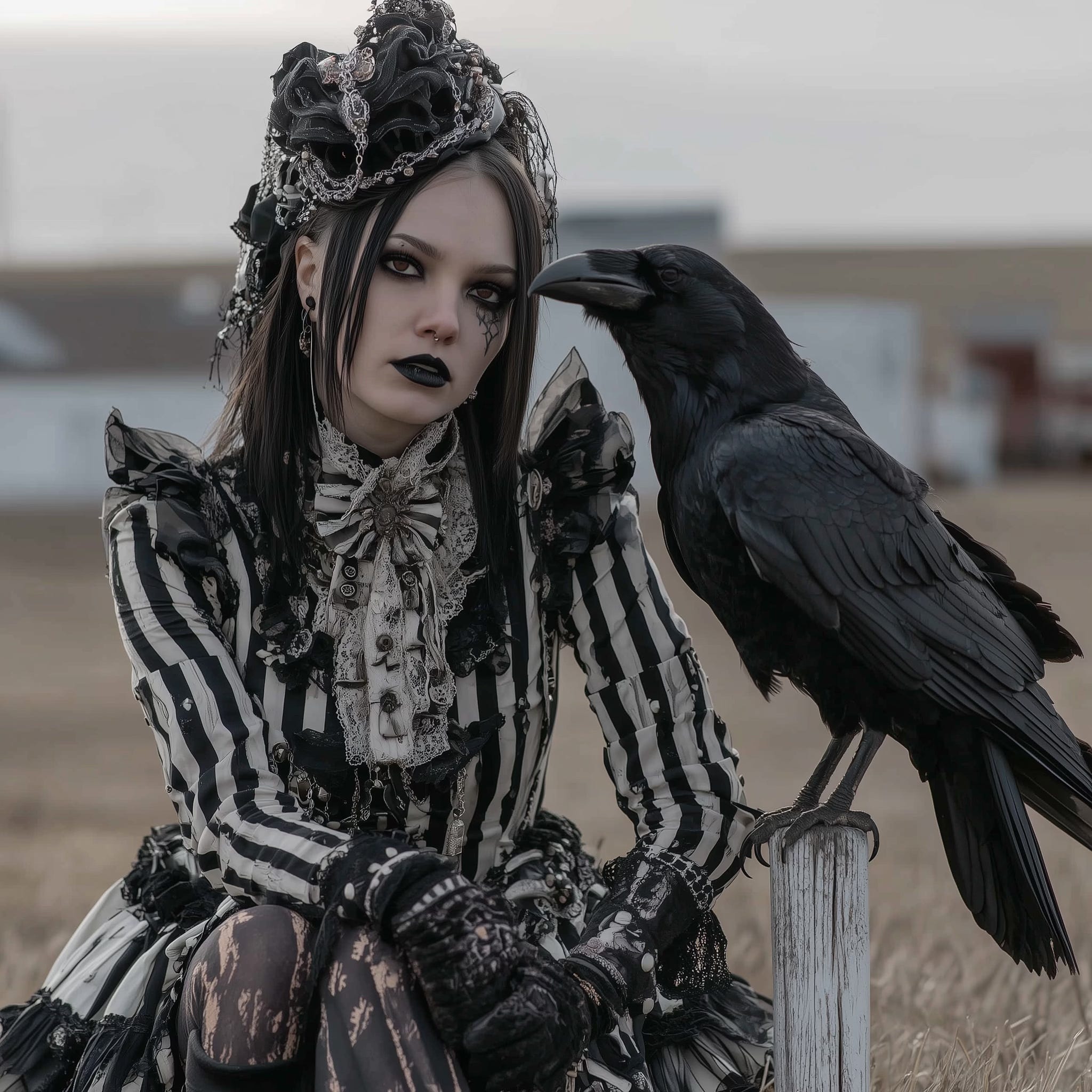
Consider what we know about the actual conditions of making art in these spaces. A young musician in Alliance, Nebraska (population 8,139) has no venue designed for original music, no record store, no community of peers engaged in similar work.
The nearest city with an established music scene, Denver, sits five hours away by car. This isolation functions as both limitation and catalyst. Without scenes to join or trends to follow, rural artists develop in aesthetic isolation, their work becoming increasingly distinctive precisely because it emerges without the homogenizing influence of urban creative communities.
The acoustic qualities of the prairie itself shape artistic production. The vast spaces create natural reverb that urban environments lack.
The wind becomes a constant sonic presence, sometimes reaching sustained speeds that produce frequencies below human hearing but which affect mood and perception. Researchers studying wind turbine syndrome have documented this phenomenon. Musicians who grow up with this soundscape inevitably internalize its patterns, its dynamics, its relationship between signal and silence.
The social dynamics of small prairie towns create their own pressures. In communities where everyone knows multiple generations of your family history, where the same few dozen people constitute your entire potential audience, every creative act becomes an act of exposure.
There’s no anonymity, no ability to experiment without consequence, no crowd to disappear into after a performance. This total visibility paradoxically exists alongside complete solitude: vast spaces where no one can see or hear you, where artistic experimentation happens in barns and basements and abandoned buildings scattered across thousands of empty acres.
The Methodist and Lutheran traditions that dominated prairie settlement created specific cultural frameworks that contemporary artists either embrace or rebel against, but cannot ignore.
The hymnal structures, the emphasis on suffering and redemption, the complicated relationship with joy persist even in secular art emerging from these regions. The repetitive patterns of agricultural work, the annual cycles of planting and harvest, the boom-and-bust economics of commodity agriculture all create rhythmic and thematic templates that appear across mediums.
The digital age has shifted but not eliminated these dynamics. High-speed internet allows rural artists to share work globally while remaining physically rooted in place. Streaming platforms mean that a musician in Russell, Kansas, can reach listeners in Tokyo or Berlin.
But the fundamental experience remains consistent: making challenging art in communities that may not understand or support it, drawing inspiration from landscapes that most Americans only see from airplane windows, translating extreme isolation into universal expression.
When interviewed, artists who stay in or return to rural prairie communities use notably consistent language. They speak of pressure, of resistance, of fighting against something that simultaneously feeds their work.
They describe the prairie not as peaceful but as pressurized, not as empty but as overwhelming in its fullness. The vast sky and endless horizon create a confrontation with scale that makes human concerns seem simultaneously insignificant and urgently important.
This isn’t romantic mythologizing. The economic precarity of rural life means artists often work multiple jobs to support their practice. The conservative social climate in many prairie towns means that experimental or challenging work may be met with hostility or indifference.
The lack of institutional support (grants, residencies, galleries, venues) means artists must create their own infrastructure or do without. These material realities shape the work as much as any aesthetic consideration.
What emerges from examining this pattern is not a simple story of escape or triumph but something more complex: a recognition that certain kinds of artistic intensity require certain kinds of pressure to form.
The prairie’s combination of spatial vastness and social constraint, of natural beauty and economic brutality, of deep tradition and contemporary crisis, creates conditions where art becomes less luxury than necessity, less entertainment than survival mechanism.
The darkness in this work isn’t decorative or adopted. It emerges from direct encounter with landscapes and communities experiencing massive transformation, places where the promised abundance of agricultural life has given way to consolidation and depopulation, where the American dream of land ownership has become a burden many cannot bear.
Artists working within these realities produce work that sounds like what it is: the voice of places most of America has forgotten, speaking truths that comfort cannot contain.