

The Bethany branch library in Lincoln, Nebraska offered me listeners before it offered me any idea of theatre. I was a teenage read-aloud volunteer, which meant I was close enough to childhood to know how easily a story could lose me. I also knew how a voice could bring a child back.
The work was simple. I read to children. There was no reason to call it theatre, and there was every reason to notice the performance in it. A reader chose a book, opened it, and stayed with the people who had come to listen. The act had a beginning and an end. Its audience could be small and restless, and attention was requested and answered in real time.
The title of the first book matters less to me now than the discovery that reading aloud is an act with a listener attached. A page can be excellent and still fail to hold a room. A sentence can be ordinary and land with force because a child is ready for it. The reader’s work is not to command attention. It is to make a place where attention can gather.
That lesson followed me out of the library. It followed me to my grandfather’s house in North Loup, where family stories did not arrive with a program or a curtain. They arrived through people who were eating, working, remembering, correcting one another, and trying to decide which version of an event deserved to survive. A story could be a way of handing down a name. It could also be a way of finding out what a name had cost.
North Loup gave those stories a geography. My family roots ran through the town and through the people who had lived, worked, and died there. A burial there in 2024 made that geography present again. Nebraska’s past had houses, roads, farms, churches, businesses, and graves rather than existing as an abstraction. Each place supported a different kind of evidence. A building could hold a memory, while a newspaper could fix a date or an obituary could preserve what survivors chose to say. A stone could carry an inscription.
Ord added another kind of closeness. Many of my relatives are buried there. That fact does not make the town an explanation for my family, and it does not turn grief into a document. It gives me a place where several forms of knowledge have to be held at once. I can stand in a cemetery with a name and dates in front of me and still know that the public record has left the inner life untouched.
A stone can establish an inscription without establishing a reason. An obituary can establish a public account without confirming a private room. A family story can carry truth across generations, and it can also change shape each time it is told. These are not reasons to distrust every source. They are reasons to know what each source can do.
That distinction changed the way I thought about performance. A child listening to a book and a farmer checking a forecast both resist abstraction. A musician asking for donations, an actor playing a part, a lodge conducting a funeral rite, and a family remembering a joke all have consequences. The consequences belong to particular people at particular times.
Some performances claim an outcome beyond themselves. A rain prayer asks for rain, and a benefit concert asks for money. A ceremony marks an occasion through prescribed form. A play places a role or a represented story before an audience. These acts overlap, but they do not require one definition that flattens their differences. They also do not require a common ancestor. A story does not have to prove that theatre began in a field, a shrine, or a graveyard to matter in those places.
Waiting has its own labor. It can mean rereading a page while a child decides whether to stay. It can mean clearing a pump screen, watching a windrow, preparing a place for animals, checking a price, or deciding whether to sell before the next report. Waiting can include fear, and it can include competence. The person waiting is often already at work.
I have come to distrust accounts that treat uncertainty as an empty space waiting for a story to rescue it. A song does not have to alter the weather to alter a room. A forecast does not have to guarantee a harvest to guide a decision. A performance does not have to prove a causal claim to produce attention, pleasure, revenue, recognition, or memory. The evidence has to be allowed to remain specific.
Specificity has costs. A public invitation can include some people and exclude others. A celebration can create joy and apply pressure at the same time. A benefit can raise money without proving that the money solved the problem named onstage. A memorial can provide comfort without explaining the life it commemorates. A crowd can be moved without changing what happens after it leaves.
The question worth asking is what a performance did, for whom, and at what cost. Generosity in one room can coexist with a closed door for someone else. An accurate record can leave a family’s property unresolved. A joke can be structurally perfect and remain meaningful because it was offered to one child rather than to a crowd.
I return to the Bethany branch because it gave me the smallest durable example. A reader and a listener share an interval. The book offers a sequence of events, and the listener decides whether to remain present. Nothing about that exchange proves a universal theory of art. It does prove that attention has a material history: someone spoke, someone listened, and something happened between them.
The family places taught me the companion lesson. Every act of remembrance has an evidence trail, and every trail has gaps. The gaps do not authorize invention. They ask for care with names, dates, places, and sources. They also ask for restraint with the stories we tell about ourselves. A family becomes visible through what is preserved and through what cannot be recovered.
The Bethany branch taught me that a story can be an offer of attention. North Loup and Ord taught me to ask what that offer contains, what it costs, and what it leaves behind. Those lessons remain with me whenever I open a book.
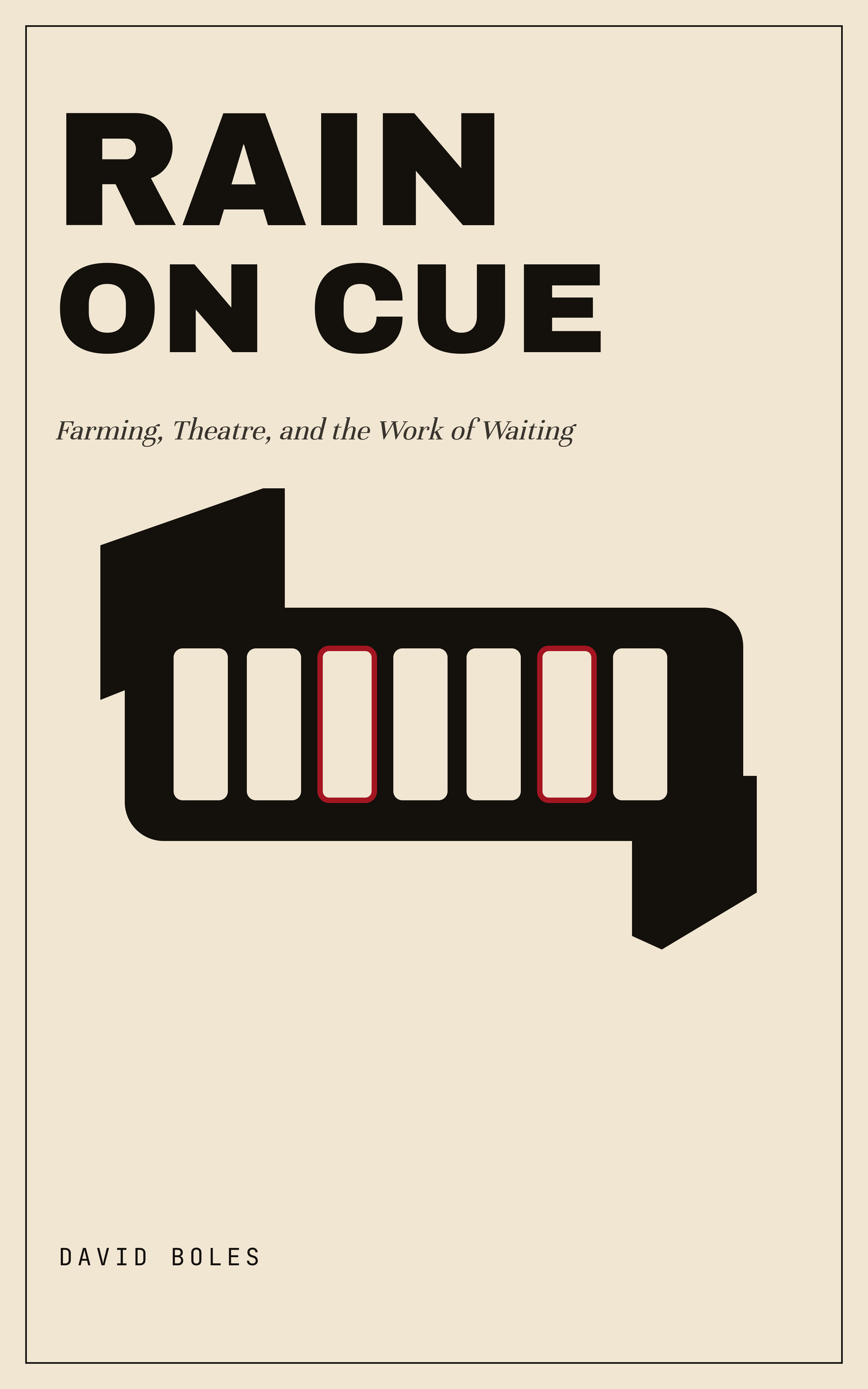
Rain on Cue: Farming, Theatre, and the Work of Waiting is my new book, and it is available now at BolesBooks.com and Amazon. Jim’s white room, the Victorinox, and the larger inquiry into performance, evidence, and uncertainty are waiting there.